Ordinatio Sacertodalis: Infallible?
/Is the ban on women’s ordination an infallible teaching of the Catholic Church? Some claim that Pope John Paul II’s 1994 Apostolic Letter to the Bishops of the Catholic Church Ordinatio Sacerdotalis on Reserving Priestly Ministry to Men Alone (OS) settles the matter. They suggest that those who advocate for women’s ordination should simply pack their bags and go home.
But is Ordinatio Sacerdotalis infallible? It’s muddy water.
Initial reactions treated OS as an exercise of papal infallibility. However, the 1995 statement Responsum ad propositum dubium concerning the teaching contained in Ordinatio Sacerdotalis from what is now the Dicastery for the Doctrine of the Faith insisted instead that OS is infallible by way of the bishops’ ordinary and universal magisterium, and not by an ex cathedra act of the pope.
Canon law (c. 749) identifies three distinct modes of infallibility:
Ex cathedra: the pope alone definitively proclaims a doctrine of faith or morals (very rarely invoked).
Ordinary and universal magisterium: the bishops worldwide, in union with the pope, unanimously hold a doctrine to be infallible.
Ecumenical council (eg, Vatican II): the bishops, gathered with the pope, definitively proclaim a doctrine as infallible.
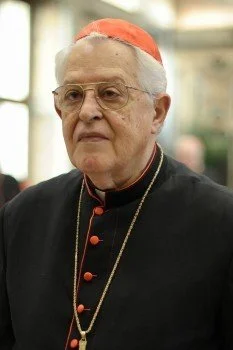
Portugal’s Cardinal José da Cruz Policarpo
OS was first widely read as potentially ex cathedra. The later claim shifted to say that the exclusion of women from priestly ordination is taught infallibly by the ordinary and universal magisterium. But that claim presupposes a genuine, freely expressed consensus of the world’s bishops. Such a consensus has never been directly tested or formally sought, and it is difficult to square with the documented instances of bishops who have been pressured, censured, or removed after voicing support for women’s ordination. (Portugal's Archbishop Cardinal Polycarpo is an example of being bullied by Rome into retracting support for women’s ordination) or silenced or dismissed (Australia's Archbishop William Morris.)
Rome's unilateral claim that there is universal agreement among bishops that women are out falls apart when one simply examines the record of Bishops who have tried to speak up.
Canon 749 §3 is explicit: no doctrine is to be understood as infallibly defined unless this is manifestly demonstrated. On this standard, the assertion that OS is infallible remains unproven.
Under Pope John Paul II, discussion about women’s ordination was specifically prohibited.
During and since the papacy of Pope Francis, open discussion of women’s ordination has been treated with greater freedom. Initially more bishops began to cautiously express support or at least openness to development in this area. Now more and more are openly proclaiming their support for women’s ordination.
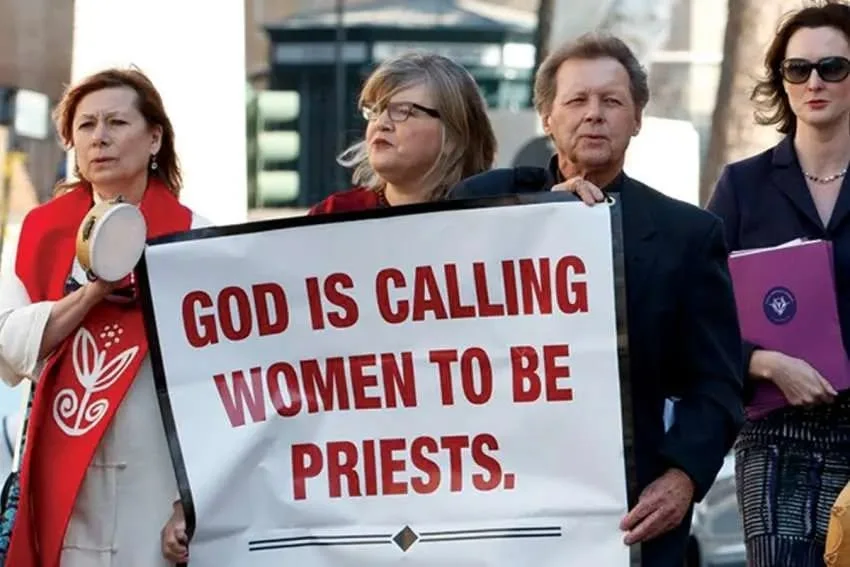
From left to Right: Roman Catholic WomanPriest, Janice Sevre-Duszynska (USA), Therese Koturbash (CNWE - Canada), Fr. Roy Bourgeois (USA), Miriam Duignan (Communications Coordinator - womenpriests.org) Rome 2011
Respect for the magisterium is essential. But so, too is the magisterium’s accountability to scripture, authentic Tradition, sound theology, the human sciences, canonical norms, and the discernment of the Christian faithful. Simply appealing to it has always been this way is no longer adequate (and never has been) in an institution that claims to be about truth and faithfully following Christ.
'A custom without truth is merely ancient error.' - St. Cyprian
Therese Koturbash
WOW Communications
11 January 2026
Learn more:
Interested in learning more? -- with thanks to our international group, Wijngaards Institute for Catholic Research and their online library at womenpriests.org
- Key Theologians from Around the World Reject the Claim That Ordinatio Sacerdotalis is Infallible
- Was the Teaching Infallible? Peter Burns, SJ