Ousted cardinal McCarrick gave more than $600,000 to fellow clerics, including two popes, records show: Washington Post 26 Dec 2019

Editorial note from Women’s Ordination Worldwide: Cash for favours or to avoid investigation of sex abuse?

Recent sad news reveals that serial sex abuser of seminarians and more, now former Cardinal Theodore McCarrick (‘Uncle Ted’) gave hundreds of thousands of dollars in church money to powerful Catholic clerics over nearly two decades while the Vatican failed to act on claims he had sexually harassed young men.

McCarrick was one of the most recognizable church figures in US America during a career spanning a half-century. He traveled the world for the Vatican and became the U.S. Catholic Church’s de facto spokesman nearly two decades ago as it reeled from a sex-abuse crisis that began in Boston.]

What The Washington Post does not point out is that in the midst of this grave scandal, McCarrick has never been excommunicated. Funny that. Had he had taken part in the ‘grave crime’ of ordination of a woman, McCarrick would have been immediately excommunicated and defrocked within a year.

The Vatican and it’s record on a) women and b) justice leaves a lot to be desired. There are people who need to go to jail.
_________________

Ousted cardinal McCarrick gave more than $600,000 to fellow clerics, including two popes, records show

The Washington Post | Investigations
By Shawn Boburg,
Robert O'Harrow Jr. and
Chico Harlan
Dec. 26, 2019

Former cardinal Theodore McCarrick gave hundreds of thousands of dollars in church money to powerful Catholic clerics over nearly two decades, according to financial records obtained by The Washington Post, while the Vatican failed to act on claims he had sexually harassed young men.

Starting in 2001, McCarrick sent checks totaling more than $600,000 to clerics in Rome and elsewhere, including Vatican bureaucrats, papal advisers and two popes, according to church ledgers and former church officials.

Ousted cardinal McCarrick gave more than $600,000 to fellow clerics, including two popes, records show

Ousted cardinal McCarrick gave more than $600,000 to fellow clerics, including two popes, records show

Several of the more than 100 recipients were directly involved in assessing misconduct claims against McCarrick, documents and interviews show. It was not until 2018 that McCarrick was removed from public ministry amid allegations of misconduct decades earlier with a 16-year-old altar boy, and this year he became the first cardinal known to be defrocked for sexual abuse.

The checks were drawn from a little-known account at the Archdiocese of Washington, where McCarrick began serving as archbishop in 2001. The “Archbishop’s Special Fund” enabled him to raise money from wealthy Catholic donors and to spend it as he chose, with little oversight, according to the former officials.

McCarrick sent Pope John Paul II $90,000 from 2001 to 2005. Pope Benedict XVI received $291,000, most of it a single check for $250,000 in May 2005, a month after he was elevated to succeed the late John Paul.

Representatives of the former popes declined to comment or said they had no information about those specific checks. A former personal secretary to John Paul said donations to the pope were forwarded to the secretary of state, the second most powerful post at the Vatican. Experts cautioned that such gifts may also have been directed to papal charities.

A Vatican spokesman declined to comment. In statements, Vatican clerics who received checks described them as customary gifts among Catholic leaders during the Christmas season or as a gesture of appreciation for their service. They said the gifts from McCarrick were directed to charity or used for other proper purposes.

The gifts “never had any effect on the Cardinal’s decision-making as an official of the Holy See,” said a spokesman for Cardinal Leonardo Sandri, a high-ranking cleric who received $6,500 from McCarrick in the 2000s, the ledgers show.

The checks from McCarrick’s fund add a new dimension to a scandal over how he rose to the highest levels of the U.S. Catholic Church and remained there despite complaints of misconduct that reached the Vatican as early as 2000. A Post investigation earlier this year found that another cleric, a McCarrick ally who was a bishop in West Virginia, also gave cash gifts to influential clergy in the United States and at the Vatican while facing allegations of sexual misconduct and financial abuses.

Do you have information about a fund or charity controlled by a high-ranking cleric in the U.S. Catholic Church? Tell the Washington Post about it using this confidential form.

McCarrick, a legendary fundraiser for the church, was defrocked in February after Vatican officials found him guilty of two charges: soliciting sex during confession and committing “sins” with minors and adults “with the aggravating factor of the abuse of power.”

The Vatican plans to release a report about its handling of the allegations against McCarrick in the coming months, church officials have said. The financial records from the Archbishop’s Special Fund are among the documents church officials in Washington sent to Rome for that examination, according to one former archdiocese official. The former officials spoke on the condition of anonymity because they were not authorized to discuss the matter.

An attorney for McCarrick did not respond to requests for comment for this story. In his only public statements about the misconduct allegations, McCarrick recently told a reporter, “I do not believe that I did the things that they accuse me of.”

In a statement to The Post, the Archdiocese of Washington said McCarrick had sole control of the tax-exempt fund.

“The funds in the account came from donations sent personally to Mr. McCarrick to direct in his sole discretion,” the archdiocese said. “During his tenure in Washington, Mr. McCarrick made contributions to many charitable and religious organizations and members of leadership in the Church.”

The ledgers obtained by The Post show names of beneficiaries, check numbers, amounts and dates of disbursement. The ledgers also contain the names of donors for the years 2010 to 2016.

McCarrick’s fund took in more than $6 million over 17 years. Among the biggest contributors was Maryanne Trump Barry, the sister of President Trump and a former federal appellate judge. She gave him at least $450,000 over four years, the records show. She declined to comment.

McCarrick directed millions of dollars from the fund to Catholic charities in the United States and in Rome, as well as organizations in countries stricken by poverty and conflict, the ledgers show.

Yet nearly 200 checks were sent to fellow clerics, including more than 60 archbishops and cardinals.

The leader of a foundation that made substantial contributions to McCarrick’s fund said he was surprised to learn that checks went to clerics. Tom Riley, president of the Connelly Foundation, based outside Philadelphia, said in a statement that his group’s contributions were meant to help “the poor, the needy, refugees, and the mission of the Catholic Church.”

“Everything about the current situation is a source of terrible sadness for us,” he said.

McCarrick greets the crowd at the completion of his installation as archbishop of Washington in 2001 at St. Matthew’s Cathedral. (Michael S. Williamson/The Washington Post)

McCarrick greets the crowd at the completion of his installation as archbishop of Washington in 2001 at St. Matthew’s Cathedral. (Michael S. Williamson/The Washington Post)

Checks to key figures

McCarrick, 89, became one of the most recognizable church figures in America during a career spanning a half-century. He traveled the world for the Vatican and became the U.S. Catholic Church’s de facto spokesman nearly two decades ago as it reeled from a sex-abuse crisis that began in Boston. In Washington, he presided over funerals of the city’s political elite, including Edward M. Kennedy, the Democratic senator from Massachusetts, and hosted dinners for President George W. Bush and other dignitaries

Behind the scenes, McCarrick’s alleged conduct so alarmed some of his fellow clerics that they reported it to superiors, according to documents that have been posted online in recent years and interviews with some of those involved.

One of those who came forward was the Rev. Boniface Ramsey, a teacher in the late 1980s and early 1990s at the Immaculate Conception Seminary in the Archdiocese of Newark. McCarrick was leader of the archdiocese for more than a decade.

Ramsey said publicly last year that he called the Vatican’s U.S. diplomat, known as the apostolic nuncio, in 2000 to sound the alarm when McCarrick was announced as the next archbishop in Washington.

“I was just shocked,” Ramsey said in a recent interview with The Post.

Ramsey said he told the apostolic nuncio, Archbishop Gabriel Montalvo, that McCarrick routinely took students from the seminary to his New Jersey beach house and pressured them to sleep with him in his bed. Ramsey told Montalvo he was not aware of any sexual contact but considered McCarrick’s behavior inappropriate.

Montalvo instructed Ramsey to put his claims in writing so they could be forwarded to the Vatican, and Ramsey did so, he said. Ramsey heard nothing back until 2006, when he received a letter from Sandri, then an archbishop in the Vatican secretary of state’s office. The letter briefly acknowledged his warning from several years earlier, according to a copy he posted online.

The ledgers obtained by The Post show that McCarrick was writing checks in those years to Montalvo, Sandri and other senior prelates responsible for managing clerics or handling sex-abuse allegations.

The Rev. J. Augustine Di Noia in 2009. He now is an archbishop. (Domenico Stinellis/AP)

The Rev. J. Augustine Di Noia in 2009. He now is an archbishop. (Domenico Stinellis/AP)

Montalvo accepted three checks from McCarrick worth a total of $5,000 before his death in 2006, the ledgers show, while Sandri received the $6,500 from 2002 to 2008.

Cardinal Angelo Sodano, who until 2006 served as secretary of state, received $19,000 from 2002 to 2016, the records show.

Sodano did not respond to messages seeking comment.

The Rev. J. Augustine Di Noia, an American who in 2001 started working in the Vatican office that assessed sex-abuse claims, accepted six checks worth a total of $9,500 from 2001 to 2009, the records show.

In a statement, a spokesman for Di Noia, now an archbishop, said the first check was for expenses related to his move to the Vatican. Others were “Christmas-time offerings” or were given to support him as he transferred to another Vatican post in 2009.

“Archbishop Di Noia affirms categorically that Theodore McCarrick never attempted to influence him in his work for the Holy See,” he said. “Whatever were Theodore McCarrick’s tragic personal failures, it is nevertheless a sad day when improper motives are reflexively assigned to assistance given and received in good faith.”

Told by The Post of McCarrick’s checks, Ramsey said he was not surprised.

“I assumed something like this was going on,” he said. “But I didn’t know checks were going to individual clerics.”

Lack of action

A retired bishop of the Diocese of Metuchen, N.J., said in a statement last year that in December 2005 he contacted Montalvo with new allegations about McCarrick, who had been bishop there in the 1980s. Bishop Emeritus Paul Bootkoski said he called the apostolic nuncio and then followed up in writing to relay two former seminarians’ claims of sexual misconduct by McCarrick.

Officials in the Metuchen Diocese deemed one claim so significant that they had secretly paid an $80,000 settlement, according to recent news accounts. They would pay $100,000 to the second seminarian a short time later.

While leaders in Rome considered how to proceed, McCarrick reached retirement age. In May 2006, he stepped down from his post in Washington, his public reputation untarnished. He remained prominent in church affairs and in his capacity as archbishop emeritus was allowed to maintain control of the special fund.

At least one Vatican official has said he was infuriated by the lack of action against McCarrick. Late in 2006, Archbishop Carlo Maria Viganò wrote a memo urging Sandri and Cardinal Tarcisio Bertone, then the secretary of state, to sanction McCarrick, according to a public letter Viganò released through Catholic publications in 2018.

Viganò wrote that his superiors never responded to the memo he sent in 2006. He accused Vatican officials of protecting McCarrick and asserted that McCarrick “had the financial means to influence decisions” at the time. He did not elaborate in the letter and did not respond to a message seeking comment.

Viganò’s August 2018 letter was published soon after the church announced that McCarrick was being removed from public ministry.

Critics of Viganò have accused him of using the letter to undermine progressive adversaries within the church. In public statements, some top Vatican officials have disputed details of Viganò’s account, including his claim that Pope Francis was aware of detailed allegations against McCarrick years ago but ignored them. Francis does not appear among the list of check recipients, according to the ledgers obtained by The Post.

At the same time Viganò says he was urging sanctions, McCarrick continued sending checks to key church figures. The checks were often clustered around Christmas, with just over half recorded in the ledgers in December or January, according to a Post analysis. In some cases, McCarrick started giving clerics money when they took on new jobs with more authority.

In 2007, among the new beneficiaries was Bertone, who had recently been named secretary of state. Records show that Bertone received seven checks worth a total of $7,000 before he stepped down in 2013.

Cardinal Fernando Filoni began receiving checks in 2008, soon after he was elevated to be a top aide to Bertone. Filoni received $3,500 through 2013, the records show.

Viganò said in his public letter that he shared his concerns about McCarrick with Filoni in 2008. Once again, nothing came of it, Viganò said.

“I was greatly dismayed at my superiors for the inconceivable absence of any measure against the Cardinal,” Viganò wrote.

Bertone and Filoni did not respond to messages seeking comment.

McCarrick also gave to lower-level officials in Rome.

American Archbishop Peter Wells started receiving checks in 2010, the year after he took a key Vatican job under Filoni. Wells had received $2,500 by the time the checks stopped in 2016, the year he left the post for an assignment outside the Vatican.

Other recipients included the longtime head of the papal household, Cardinal James Harvey, and at least two priests working as personal assistants to Benedict and John Paul.

Wells did not respond to messages seeking comment.

In an interview, Harvey said numerous bishops from big cities in the United States sent him monetary gifts to show appreciation for his office’s help, including in making arrangements for visits to the pope.

“It never occurred to me that this would be in some way improper,” he said.

“It wasn’t about currying favor,” Harvey said. “It wasn’t some parallel system of nefarious activity.”

McCarrick, as archbishop of Washington, and other U.S. cardinals and bishops prepare for a reception at the U.S. Embassy in 2005 with President George W. Bush. (Andrea Bruce/The Washington Post)

McCarrick, as archbishop of Washington, and other U.S. cardinals and bishops prepare for a reception at the U.S. Embassy in 2005 with President George W. Bush. (Andrea Bruce/The Washington Post)

A spokesman for Cardinal Pietro Parolin, the Vatican’s secretary of state, called such gifts common and said they do not influence how Parolin exercises his official responsibilities. He received $1,000 from McCarrick shortly after becoming secretary of state in 2013.

“To send and receive such gifts is customary during the Christmas season, including between Bishops, as a sign of appreciation for work carried out in the service of the universal Church and for the Holy Father,” the spokesman said in a statement.

Some experts, told of The Post’s findings, said cash gifts can create the appearance of a conflict.

“It raises questions about whether McCarrick was buying access or protection,” said the Rev. Thomas Reese, a columnist at Religion News Service and author of a book about Vatican politics and operations. “This doesn’t pass the smell test.”

Former West Virginia bishop Michael J. Bransfield gave $350,000 in cash gifts to clerics in the United States and at the Vatican from 2005 to 2018, The Post reported in June. He used church money that was routed through his personal account.

The church began investigating Bransfield last year after one of his top aides wrote in a confidential letter to church leaders that the gifts, many of them sent around the Christmas season, were an attempt to “purchase influence.” The investigation later faulted Bransfield for the gifts and found that he inappropriately spent millions of dollars in church money on personal extravagances and engaged in sexual misconduct with seminarians and young priests. Bransfield, who was removed from public ministry in July, has denied wrongdoing.

More than a dozen recipients of Bransfield’s gifts pledged to return the money after The Post reported that it was drawn from church accounts.

At least 17 clerics who received cash gifts from Bransfield also received checks from McCarrick, records show.

Well-known donors

The donors to the Archbishop’s Special Fund include wealthy and well-known figures.

Among them are novelist Mary Higgins Clark; John B. Hess, chief executive of oil giant Hess Corp.; and a foundation run by Rep. Francis Rooney (R-Fla.), who previously served as U.S. ambassador to the Vatican, the ledgers show.

“For many years I have supported a long list of Catholic charities and causes because I believe in the work they do,” Clark said in a statement. “If the money I donated to Cardinal McCarrick was misused in any way, it was without my knowledge, and I am shocked and saddened.”

Hess and Rooney did not respond to requests for comment.

Another donor was William McIntosh, a former Wall Street executive. McIntosh said he got to know McCarrick in the 1990s when both served on the board of the Papal Foundation, a Philadelphia-based charity that has raised hundreds of millions of dollars for initiatives favored by the pope. McCarrick was a founder of the charity and its first president.

McIntosh said he began sending contributions to McCarrick when he was archbishop in Newark for a discretionary charitable account he controlled at the time. McIntosh said he trusted McCar­rick’s judgment and was unaware that money he sent him over the years went to other clerics.

A few days after being installed as archbishop in January 2001, McCarrick is assisted in the preparation of incense by altar servers at the Shrine of the Sacred Heart in Northwest Washington. (Juana Arias/The Washington Post)

A few days after being installed as archbishop in January 2001, McCarrick is assisted in the preparation of incense by altar servers at the Shrine of the Sacred Heart in Northwest Washington. (Juana Arias/The Washington Post)

“Based on my work with him at the Papal Foundation, I considered him excellent at what he did and tried to be helpful,” McIntosh said. “I had no idea what he was doing with it. I assumed he was doing good things.”

A spokeswoman for the Archdiocese of Newark, Maria Margiotta, declined to answer questions about the fund McCarrick controlled there. “Since matters involving former Cardinal McCar­rick are under review by law enforcement and/or involve litigation, it would be inappropriate for us to discuss publicly,” she said.

The current archbishop of Newark, Joseph W. Tobin, received a $1,000 check from McCarrick in 2016, the ledgers show. Margiotta said that the check was a gift marking Tobin’s elevation as a cardinal and that he believes he deposited it “in a personal account, where it was used to defray the expenses incurred by his new responsibilities or for charitable purposes.”

Some of the money that flowed into McCarrick’s fund came from a foundation that he advised as a board member.

McCarrick directed at least $250,000 to his fund from the Loyola Foundation between 2011 and 2016, as he sat on the foundation’s board, said Executive Director Gregory McCarthy. Each foundation board member was allowed to designate an annual allotment to a favored charity, McCarthy said.

“In this case, the funds went to the Archbishop’s Fund, which was overseen by the Archdiocese of Washington,” McCarthy said. “Frankly I did not know where the funds would go from there.”

McCarthy said foundation officials received assurances from the Archdiocese of Washington that McCarrick’s account was a legitimate charitable fund.

According to two former archdiocese officials, the fund was reviewed yearly to account for expenditures and deposits but otherwise received minimal oversight.

Meanwhile, the number of people claiming to have been abused by McCarrick continues to expand. Early this year, U.S. church officials sent the Vatican allegations involving at least seven boys and dating from 1970 to 1990, The Post has reported.

Amid the fallout, the Catholic Church has been under pressure to explain how it ignored or missed years of warnings. The Vatican report addressing those issues is expected to be released as early as January. In announcing the review in 2018, the Vatican said in a statement that “both abuse and its cover-up can no longer be tolerated.”

McCarrick celebrates Mass at the Basilica of Sts. Nereus and Achilleus in Rome in 2005. (Andrea Bruce/The Washington Post)

McCarrick celebrates Mass at the Basilica of Sts. Nereus and Achilleus in Rome in 2005. (Andrea Bruce/The Washington Post)

Harlan reported from Rome. Stefano Pitrelli in Rome and Andrew Ba Tran and Alice Crites in Washington contributed to this report.

Women's Ordination Worldwide: 2019 A Year in Review

Members of Women’s Ordination Worldwide in action at the Vatican’s Synod on the Amazon. October 2019

Members of Women’s Ordination Worldwide in action at the Vatican’s Synod on the Amazon. October 2019

2019 was a year of action for Women’s Ordination Worldwide. Here is a review of worldwide events and where took action.

  • 2019: In February, Pope Francis acknowledged a longstanding dirty secret in the Roman Catholic Church — the sexual abuse of nuns by priests. It's an issue that had long been kept under wraps, but in the #MeToo era, a #NunsToo movement has emerged, and now sexual abuse is more widely discussed. Sexual Abuse of Nuns: Longstanding Church Scandal Emerges From The Shadows


  • 2019: Women’s Ordination Worldwide writes to Pope Francis asking the hierarchy to stop mansplaining EasterThe hostage-taking of Christianity by the all male clerical caste is wrong. Why is Pope Francis allowing this injustice to continue when Jesus reminded us that we are all in his image and that we are all asked to bring his message of love to the world? Dear Pope Francis, if Jesus chose Mary Magdalene to be the herald of the Good News, why won't we be hearing a woman preaching the Gospel this Easter Sunday?


  • 2019: AprilSr. Ruth Schönenberger, prioress of the monastery of the Missionary Benedictine Sisters of Tutzing, and responsible for Benedictine communities in Bernried, also in Bavaria, and Dresden, in Saxony (The Missionary Benedictine Sisters of Tutzing has 1,300 sisters in 19 countries) publicly calls for gender equality in the Church. ‘I take for granted that a woman can also be ordained. I do not understand the reasons against it. I am surprised that the presence of Christ is reduced to being a man. We have here also qualified theologians who only lack consecration — nothing else. I often wonder why this differentiation is made based on sex and not qualifications and further education. One should look for who is qualified for this task.’


  • 2019: May - Statement of Indian Women Theologians Forum: ‘The servitude that is the lot of a great majority of women betrays male privilege that is normalized in families and in the Church. This situation makes us interrogate whether the ‘Gender Policy of the Catholic Church in India’ acclaimed as the first of its kind, has remained a failed promise even after 10 years of its existence… Speaking truth to power like the Syrophoenician woman of the Gospels, we reclaim our position, voice and rights as disciples of Jesus in the Church. Stepping beyond the boundaries of gendered identity constructions that have devalued us over the ages, we wish to retrieve our full humanity as persons created, graced and commissioned by the empowering God to build a new Church and social order which is egalitarian and inclusive. We resolve to continue our struggle to build a GENDER JUST CHURCH by exercising our collective agency and networking with individuals and communities committed to realizing the vision of the Reign of God in this world.’


  • 2019: Pope Francis stalls on restoration of the ordained women’s diaconate. He claimes a lack of clarity as to historical roots of the sacramental rite. Women’s Ordination Worldwide calls for action through its statement, Women’s Ordination Worldwide Responds to Pope Francis’s Delay on Women Deacons.


  • 2019: German Catholic women launch a weeklong boycott by suspending voluntary work in churches. Their protest has crystallized fury over a male-only priesthood and bishops' foot-dragging on sex scandals. The grassroots Catholic women's movement Maria 2.0 holds its own services, without priests, outside Catholic churches in 50 cities and towns in Germany. From May 11 until May 18, participating women do not enter churches or perform volunteer work in their parishes in order to make known how empty the churches are without women. Ruth Koch, a leader of Maria 2.0, calls on the Vatican to open the priesthood to women and to drop the celibacy requirement for priests. She explains that the name Mary (Maria in German) is chosen for the movement because she is the most important woman in the Bible. The term 2.0 refers to a new and modern version. It is reported that Bishop Franz-Josef Bode of Osnabrück supports the campaign.


  • 2019: May - Fr. Frank Brennan, SJ, Professor of Law in the Public Policy Institute at the Australian Catholic University, Chief Executive Officer of Catholic Social Services in Australia and former Chair of Australia’s National Human Rights Consultation Committee renews his call for Church to consider women priests. Saying he has long been a supporter of women’s ordination, he observes the Church must adapt and ensure equality for everyone. He expresses his fear for the future of the Church unless it engages in open dialogue on issues such as women priests. In a talk at a Concerned Catholics of Canberra Goulburn forum, he refers to Pope Francis's view that a church that loses its humility and stops listening to others "loses her youth and turns into a museum". Yet this thinking has not been extended to speaking about women priests. He observes: "The official position is no longer comprehensible to most people of good will, and not even those at the very top of the hierarchy have a willingness or capacity to explain it.”


  • 2019: June - SANTIAGO, Chile — Pope Francis accepts the resignation of the auxiliary bishop of Santiago, Carlos Eugenio Irarrázabal, just 24 days after the pontiff appointed him to the post, and weeks after the bishop made comments about the lack of women at the Last Supper. His short tenure began with a television interview in which he noted that there were no women seated at the table at the Last Supper and that “we have to respect that.” “Jesus Christ made decisions, and they were not ideological,” he said, “and we want to be faithful to Jesus Christ.” He also said that perhaps women “like to be in the back room.” The bishop’s comments angered women’s groups and critics of the church in Chile at a time when confidence in church leadership in the once staunchly Catholic nation has plummeted. In a statement issued by the archdiocese, Bishop Irarrázabal said he wanted to “reiterate my apologies to those have been affected by my comments.”


  • 2019: July - Pope Francis who has said repeatedly said that "time is greater than space," and some six years and three months into his pontificate, appoints seven women — superiors general of religious orders — to the space of a Vatican congregation. This is a first. As members of the Congregation for Institutes of Consecrated Life and Societies of Apostolic Life, these women will have a voice as part of the global body most directly involved in matters related to their vocation. A call is made for a ‘Synod on Women.’


  • 2019: August - Retired Father Joseph Patrick Breen speaks out publicly in support of ordination of women. Citing that ‘women in most every Christian church today can be priests or ministers’ and that women in Judaism, the faith of Jesus, are ordained, he says, ‘We need to study this and overcome prejudice we inherited from the past and fully appreciate the greatness of womanhood and equality. I also believe it is a matter of justice. I would encourage us, as a church, to study, pray and have a sincere discussion to perhaps come to a better understanding. Women priests would certainly enhance the quality of our church and our faith experiences, and in turn be a great blessing to our church. I believe that we must respond to “the signs of the times” and make changes, if we want people to stay with us and return to the church.’


  • 2019: Radicals and the Rule - Member group of Women’s Ordination Worldwide Women’s Ordination Conference (WOC) hosts a ‘not-to-be-missed fall event’, "Radicals and The Rule," a conversation between Benedictine sisters Joan Chittister and Teresa Forcades. These radical sisters follow the Rule of Benedict - but they're not afraid to challenge other rules. The event is a first encounter between these Catholic feminist leaders, and an her-storic evening for WOC.


  • 2019: October - Women’s Ordination Worldwide’s International Steering Committee meets in Lisbon, Portugal. The meeting is hosted by member group Nós Somos Igreja (We Are Church Portugal).


  • 2019: October - Women’s Ordination Worldwide publicly gathers at the Vatican’s Synod on the Amazon to remind Synod Bishops who gather to discuss priest shortages in Amazonia that women are already serving in priestly roles and to demand that they too are recognized as equal leaders of the Church. Women’s Ordination Worldwide joins the call for ecological justice and says that it cannot be separated from the call for spiritual and sacramental equality. WOW’s message to the Synod is: "Empowered women will save the Earth, Empowered women will save the Church" . Click here for WOW’s Press Release WOW at the Amazon Synod to Demand that Women Are Finally Recognized as Equal Church Leaders. Although police issue WOW a protest and procession permit, procession is is disallowed when police see that the umbrellas have the subversive words ‘Women Priests’ printed on them. Unmarked umbrellas, say police, are fine but not ones that say women priests. The action is covered by international media.


  • 2019: Women’s Ordination Worldwide is encouraged by the renewal of the Pact of the Catacombs, signed by 40 Bishops from the Synod on October 20, demanding that the church: ‘Recognize the services and real diakonia of a great number of women who today direct communities’ and for ‘an adequate ministry of women leaders of the community’. Without women, the Catholic Church would not exist in the Amazon and it is a matter of justice that they too are finally empowered as equals rather than being supplanted by local men whilst women continue to do the work of serving the communities.


  • 2019: October Bishops presiding at the Vatican’s Synod on the Amazon signal openness to giving married men the green light to priestly ordination but still keep women marginalised by holding that restoration of the ordained women’s diaconate requires yet further study. Women’s Ordination Worldwide Responds to the Amazon Synod Conclusion that Women’s Ministry Requires Further Study by saying, ‘Adding married men to sacramental ministry in the Amazon will further push aside the women the Synod recognised are currently doing the work. This reinforces prejudice and signals the supplanting of women whose spiritual leadership will be sacrificed in the name of God but is for the sake of men.’


  • 2019: November San Diego Bishop Robert McElroy publicly announces his support for restoration of the ordained women’s diaconate. This appears as the first such public disclosure of a U.S. prelate since Pope Francis reopened consideration of the history of women's diaconal ordination in 2016.


  • 2019: November 2- Women the Vatican Couldn't Silence, WOW member group We Are Church Ireland, Voices of Faith, Trinity College Dublin jointly host former President of Ireland, Mary McAleese and Sister Joan Chittister OSB speak their truth about issues besetting the Catholic Church today that are mobilizing Catholic women and men into action and what our current leaders need to do...for a start, listen.


  • 2019: December German Synodal Path opens: With growing dissatisfaction within the Catholic Church in Germany, the German Church begins a "synodal path" aimed at renewal. The loudest voice for a transformation of the church — comes from Catholic women who are no longer willing to accept a subordinate role in a male-dominated church. ‘The grief that women have had to endure through the power of churchmen was too great, and the hope for real change is too small, ‘ says Mechthild Heil who is the leader of the Catholic Women's Association in Germany and a member of Chancellor Angela Merkel's Christian Democratic Union Party in the Bundestag. Women are calling for full equality between women and men, and women's access to all ministries in the church. "This includes all ordained ministries and governing ministries," she says.


  • 2019 Advent: Augustinian priest John Shea writes to Pope Francis reminding him that Advent is a time to wake up asking him to wake up to the injustices against women in the Church.


  • 2019 Advent: Augustinian priest John Shea writes to the College of Cardinals reminding them that Advent is a time to wake up to the injustices against women in the Church.


  • 2019: German Synodal Path - The Catholic Women’s Association of Germany (KFD) draws ‘red lines’ for that country’s Church’s ‘synodal path’ reform process: full equality in Church responsibility and a call to Rome for women’s ordination With an eventual petition to Rome to ordain women, the German Bishops would send a signal that the desire for female priests is there “not only in the Church in Germany, but also in the world Church”, say Agnes Wuckelt, Vice President of KFD. She is a member of the synodal path forum on Women in service and offices of the Church. She tells katholische.de: ‘If that [petition to Rome] did not happen, in our eyes definitely a red line would be crossed.’ Her Association is pushing for the access of women to priestly ordination via the first step, if necessary, of the sacramental diaconate. The KFD recognises that the German Church can’t take such a step on its own without the rest of the world Church. But the Association does expect that if the synodal path calls for women’s ordination, the German Bishops will take that call to the Vatican.


  • 2019 Advent: French Bishop Vesco publicly admits, ‘Sometimes, I have the impression that Jesus’ view of women was much more open than ours. Is it that the Word of God cannot be commented on by a woman at Sunday Mass? This is really a question that touches me. Today, we have women trained in theology. Why can’t we ever hear them preach?’


  • 2019 Advent: Cardinal Walter Kasper, President Emeritus of the Pontifical Council for Promoting Christian Unity, former member of the International Theological Commission, and known as ‘the Pope’s theologian, says he is convinced that “in time, doors will be opened” to women at the altar, celebrating the Mass.

We look forward to advancing progress for women’s equality in the Church in 2020.

Christ is Born! Let Us Rejoice!

Christ is born! Let us rejoice!

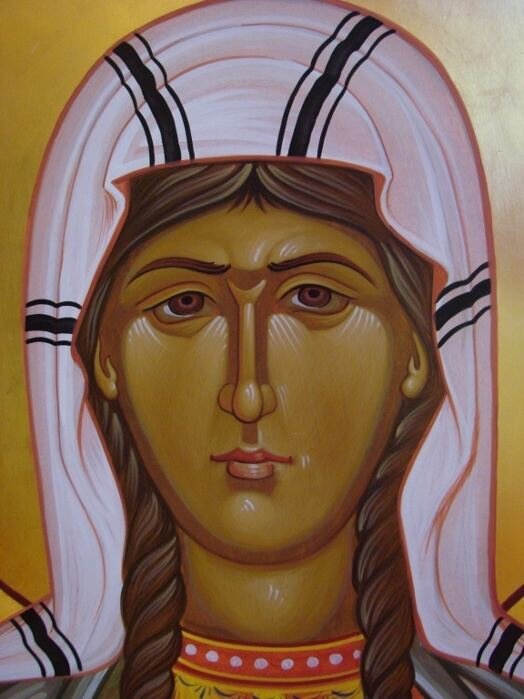
Byzantine icons often depict the midwife Salome and another woman who helped the Virgin Mary during the nativity of Jesus Christ. The ancient text of The Protoevangelium of James (thought to be from about 145 AD) provide details. Because of her presence at the birth, Salome is therefore believed to have been the first person to bear witness to the birth of Jesus and to recognize him as the Christ. From The Protevangelium we read:

Midwife Salome and another woman depicted in the lower right corner of this icon.

Midwife Salome and another woman depicted in the lower right corner of this icon.

And I [Joseph] saw a woman coming down from the hill-country, and she said to me: O man, whither are you going? And I said: I am seeking an Hebrew midwife. And she answered and said to me: Are you of Israel? And I said to her: Yes. And she said: And who is it that is bringing forth in the cave? And I said: A woman betrothed to me.

And the midwife went away with him. And they stood in the place of the cave, and behold a luminous cloud overshadowed the cave. And the midwife said: My soul has been magnified this day, because my eyes have seen strange things — because salvation has been brought forth to Israel. And immediately the cloud disappeared out of the cave, and a great light shone in the cave, so that the eyes could not bear it. And in a little that light gradually decreased, until the infant appeared, and went and took the breast from His mother Mary. And the midwife cried out, and said: This is a great day to me, because I have seen this strange sight. And the midwife went forth out of the cave, and Salome met her. And she said to her: Salome, Salome, I have a strange sight to relate to you: a virgin has brought forth — a thing which her nature admits not of.

Meister Eckhart tells us, ‘We are all called to be mothers of God for God is always needing to be born.’

When I reflect on the work for women’s ordination, women’s equality in our Church and the work for social justice in the world, I remember that our world is in labour. We are the midwives, the mothers, the people helping a new way to be born. We are the ‘undoers’ of knots in the work of redemption. The story of Christ’s birth reminds us that we are a community and that we are not alone. Our work is in service to justice. It is also work for conversion and ultimately it is work for love.

In our fragility, in our struggles and in our fierceness, as difficult as it can be, our calling is to do this work well and to do it with love.

Christ is at the centre of the story and it is Christ who brings us together. We are helping Christ to be born.

Wishing everyone a warm, blessed, merry Christmas from

Women’s Ordination Worldwide


Undoing the Knots: Elizabeth Says 'He Will Be Called John' -- A woman's view of Gospel Liberation —

In anticipation of Christ’s birth, the gospel reading for December 23* tells the story of Elizabeth naming her son John (He grows up to be John the Baptist.) I recently enjoyed being part of a conversation with theologian Tina Beattie about this reading. That conversation inspires this reflection.

The naming of John the Baptist: While friends and neighbours expect that in keeping with custom, the child will be named Zechariah, John’s mother Elizabeth chooses his name. Zechariah remains silenced by God until he endorses Elizabeth’s choice.

The naming of John the Baptist: While friends and neighbours expect that in keeping with custom, the child will be named Zechariah, John’s mother Elizabeth chooses his name. Zechariah remains silenced by God until he endorses Elizabeth’s choice.

What do we hear and see in this reading that is part of the grand story of Christ's birth? The naming of John foreshadows what Christ’s presence will bring for women. We learn that Mary's cousin Elizabeth exercises personal agency when she independently names her son ‘John’, while her husband, Zechariah, a priest, remains silenced by God until he agrees with her!

Our Lady, Mary, Undoer of Knots is one of Pope Francis’s favourite devotions

Our Lady, Mary, Undoer of Knots is one of Pope Francis’s favourite devotions

If we follow feminist biblical scholar Phyllis Trible's interpretation of Genesis - that the man calling his wife by name after eating the fruit was the first act of proprietorial domination of the woman by the man - then we can see Elizabeth's naming of John as the first truly great prophetic act of his ministry. The priest is silenced while the woman exercises authority in naming the child. While friends and neighbours expect that custom will be followed so that the child will be named Zechariah after his father, instead, Elizabeth chooses 'John'. In doing so, she does not acquiesce to custom. Through Elizabeth, this new name will be used for the first time. The act of naming and the choice of name become symbols of women's liberation in the story of Christ. Elizabeth independently exercises her personal agency. In the story of Christ, she is empowered to open the door to a new way.

If, as Irenaeus says, the incarnation undoes the knots all the way back to creation, then surely in Elizabeth and Mary being given the authority to name their children, we see the untying of the knots that have kept women bound into silence and submission?

In a world where poverty and oppression wear a feminine face, the priest who is silenced, the husband whose wife is a virgin, the Incarnation who comes first to the poor are vital signs of redemption for women. In the incarnation, the wife ceases to be the bodily property of her husband whose primary function is to bear him children. The priest ceases to have the authority to speak on behalf of the woman. And despite what today's manshow might try to tell us, from the get go in the story of Christ, women are empowered to lead.

One of Pope Francis’s favourite devotions is to Mary, ‘the undoer of knots’. I like to think that in our work for women’s ordination, we are joining in that work of undoing — untying — the knots all the way back to creation so that women’s liberation in Christian faith and the world may fully florish.

*The Gospel of Luke, Chapter 1 verses 57-66

When the time arrived for Elizabeth to have her child
she gave birth to a son.
Her neighbors and relatives heard
that the Lord had shown his great mercy toward her,
and they rejoiced with her.
When they came on the eighth day to circumcise the child,
they were going to call him Zechariah after his father,
but his mother said in reply,
"No. He will be called John."
But they answered her,
"There is no one among your relatives who has this name."
So they made signs, asking his father what he wished him to be called.
He asked for a tablet and wrote, "John is his name,"
and all were amazed.
Immediately his mouth was opened, his tongue freed,
and he spoke blessing God.
Then fear came upon all their neighbors,
 and all these matters were discussed
throughout the hill country of Judea.
All who heard these things took them to heart, saying,
"What, then, will this child be?
For surely the hand of the Lord was with him."

_______________________
Therese Koturbash, WOW Communications Team

Women Priests Are Not the Enemies of the Church - Dr. Shanon Sterringer - December 20, 2019

Rev. Dr. Shanon Sterringer | December 20, 2019

Fairport Harbor, Ohio 44077

Dear Bishop Perez,

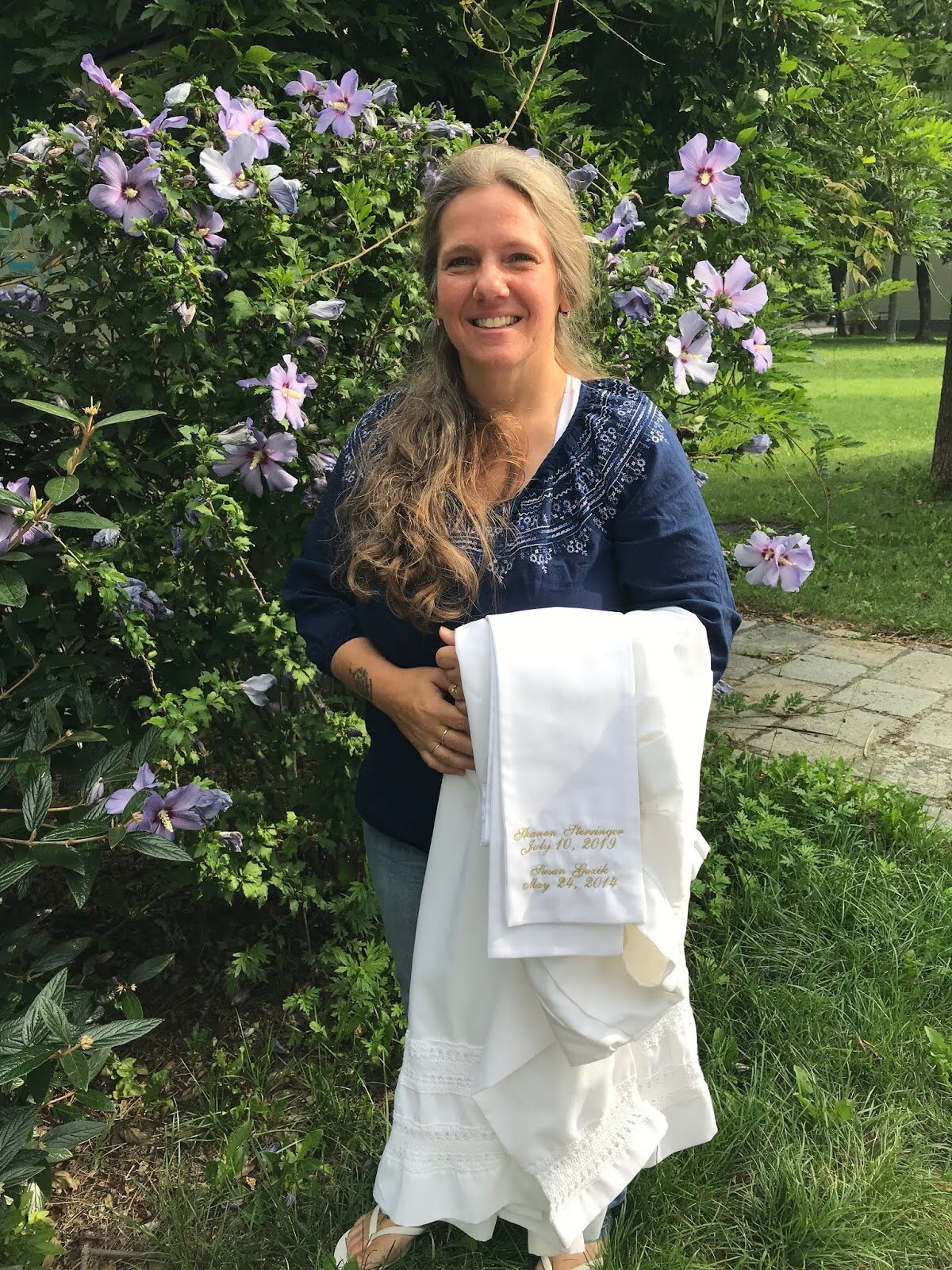
Dr. Shanon Sterringer at her ordination

Dr. Shanon Sterringer at her ordination

I received your letter dated 17 December 2019 (feast of the deaconess Olympias) apprising me of the accusations you have leveled against me regarding several canonical violations in relation to my ordination. I responded to a previous letter you sent to St. Anthony of Padua parish on 22 July 2019 (feast of the apostle Mary Magdalene), and put forth several concerns/questions at that time, none of which you have responded to in this letter or otherwise. It is disheartening that it requires a canonical penalty for you to reach out.  Please find my response to your letter below.   

Dear Dr. Sterringer, 

As Bishop of the Diocese of Cleveland, I have the most serious obligation to “defend the unity of the universal Church” and am therefore “bound to foster the discipline which is common to the whole Church, and so press for the observance of all ecclesiastical laws (canon 392, §1 CIC).

Response: I am deeply saddened to read this opening line because it affirms what many in the Church are feeling; that the role of our bishops has been reduced to enforcing unjust laws and protecting an institution not always concerned with the real needs of the people. Jesus came to bring new life and to bring it in abundance. He came to renew viriditas, which is a term the Church reformer, and now Doctor of the Church, St. Hildegard of Bingen, used to refer to the greening power that renews what has dried up and withered. Jesus repeatedly broke religious law when it oppressed or violated the people.  

Women are oppressed in this Church. We are not treated with the same dignity and respect with which Jesus treated women. Centuries of patriarchal sexism have distorted women’s roles in the Church creating ecclesiastical laws that are unjust and dry.  

From my perspective, your role as the Bishop of Cleveland should not be to enforce “discipline which is common to the whole Church, and so press for the observance of all ecclesiastical laws,” as stated. Rather, I believe your primary role is to LOVE – sincerely love - every single member of this Diocese equally (women, men, gay, straight, divorced, married, sinner, saint) for we are all created in the imago Dei. Authentic leadership creates a space for the gifts of the Holy Spirit to shape the Church into a companion model. 

Jesus was not a dictator or a ruler. He walked humbly with the people. He washed feet, he commanded his disciples, women and men, to do the same. I refuse to believe, based on the history preserved, that Jesus would condone using a book of 1,752 canons as a weapon against any of us. 

The priests in Jesus’ day felt it was their obligation to enforce the religious law as well and we know from the Gospels how Jesus responded to their fixation on the letter of the law. 

It has thus been reported to me that you have participated freely and with knowledge in an illicit and invalid ceremony (canon 1024) within the Diocese of Cleveland, Ohio on 10 July 2019 which purported to ordain you to the sacred order of deacon. It has also been reported to me that on 3 August 2019 you freely and with knowledge participated in an illicit and invalid ceremony (canon 1024) in Linz, Austria which purported to ordain you to the sacred order of presbyter.  If the above is true, then I am required to inform you (canon 1717, §1) that by your participation in these acts you have been excommunicated latae sententiae (canon 1378, Sacramentorum Sanctitatis Tutela, Norme de graioribus delictis, Article 5), the remission of which is reserved to the Apostolic See. It is my prayer for you and my concern for the good of the Church that you repent of your actions and reconcile with the Catholic Church. 

Response: In fact, it was I who reported it to you through your officers in the Parish Life Office, Seminary, and the Lay Ecclesial Ministry Office as far back as one year ago that I was seeking ordination. I reported to you directly that I was ordained to the sacred order of deacon on 10 July 2019 in the Diocese of Cleveland, Ohio and to the sacred order of presbyter on 3 August 2019 (feast of St. Lydia) in Linz, Austria. 

Both ordaining bishops, Rev. Christine Mayr-Lumetzberger and Rev. Mary Eileen Collingwood, possess the faculties to validly ordain as they were ordained by a diocesan bishop with faculties in the line of Apostolic Succession. Therefore my ordinations are valid (under the same circumstances that grant validity to right-wing Catholic break-away groups that emerged following the Second Vatican Council), though I do acknowledge the Church considers them illicit. 

You have informed me that I have been excommunicated latae sententiae (canon 1378 Sacramentorum Sanctitatis Tutela, Norme de gravioribus delictis). I accept that my relationship to the institution has been severed and this has truly been the most difficult and heart-wrenching decision I have ever had to make. But I do not accept that my relationship with God has been negatively affected. 

God called me to be a priest. I am a cradle-Catholic and I deeply love my Catholic faith. 

Speaking on behalf of women priests everywhere, our call comes through the Church. The seed of my vocation was planted within me before I was born. It was watered at my baptism and nourished as I participated in the sacraments as a child. It came to fruition as I dedicated myself fully to nine years of theological studies at your seminary and ministerial formation through your Diocese.  I understand that the institution does not recognize my vocation, but this does not change its reality. The Holy Spirit is not confined by human rules and social/cultural conditions.

You cited article 5 in Sacramentorum Sanctitatis Tutela (This is the document addressing the serious sin of sexual abuse of children by clergy. It is interesting that the Magisterium felt it was appropriate to include women priests in this document as if these issues are somehow related.) The document reads: “The more grave delict of the attempted sacred ordination of a woman is also reserved to the Congregation for the Doctrine of the Faith: With due regard for can. 1378 of the Code of Canon Law, both the one who attempts to confer sacred ordination on a woman, and she who attempts to receive sacred ordination, incurs a latae sententiae excommunication reserved to the Apostolic See.”  

Considering for a moment all of the crimes committed by the Church throughout history and particularly today, acts that are not only immoral but in many cases criminal and violent, it is hard for me to believe that God would agree that the “more grave delict” is the ordination of a woman, particularly given the fact Jesus first appeared to Mary Magdalene and commissioned her as the Apostolorum Apostola and sent her to preach the first Easter homily to “his brothers”.

 You have asked me to repent and return to the Church. What exactly are you asking me to return to? A Church that does not recognize my call? A Church that treats women as subordinate based on a distorted theology of complementarity? A Church that protects pedophile priests and bishops while judging the faithful for venial offenses? Shall I return to a Church which has hurt me time and time again, with no remorse or willingness to embrace its own need for repentance? Realistically, what do you expect from me, or anyone like me, who has a divine call and has tried to respond properly within the institution only to be forced elsewhere as a result of injustice, blatant disrespect, sexism, clericalism, or a power structure unyielding to change and growth? What would I be coming back to? Put yourself in my shoes for one moment. Would you return under the same circumstances? 

I ask that you please respond to this letter by 3 January 2020. If there is no response from you by that time, I will communicate to the Congregation of the Doctrine of the Faith your refusal to reconcile and ask the Congregation for direction regarding the proper course of action to follow.

Response: In 2018, when I put in writing to the Lay Ecclesial Ministry Office, the Seminary, and the Secretariat for Parish Life and Development my intention to seek ordination, I acknowledged at that time that I understood the consequences of removing myself from the Diocese. I sent you a note dated 23 July 2019 reporting that I had been ordained and that I understood I was no longer affiliated with the Diocese and was no longer under your heirarchal jurisdiction. 

I do not understand how it is appropriate for you to expect me to answer for something that no longer applies to me? If I were still working at the parish this would make sense, but I have been gone from it since 28 September 2018 and have intentionally avoided being on parish or diocesan property so as to not confuse people. I am in a very different place on my faith journey than I once was. While there may have been an opportunity previously to engage in a conversation of reconciliation, the opportunity no longer exists. Too much has unfolded in the past fifteen months that is irreversible. Given the fact that I have already lost my position in the parish, lost my salary and health benefits, lost many long-time connections and relationships, have huge student loans to repay that were incurred by my theological studies, and have been informed I was excommunicated latae sententiae, what other “course of action” are you threatening me with at this point in time?  

With prayers that the Holy Spirit move you to seek salvation in Christ and his Church and invoking the guidance and intercession of the Most Holy Mother of God.

Response: I understand your position and your responsibility to pray for those of us you feel have separated ourselves from Christ and the Church. However, the Catholic Church does not control the only spigot on the font of salvation. I deeply love Christ and while I have accepted that I no longer fit into the institution, “his Church” is an integral part of who I am and always will be. It may be difficult to understand how someone can continue to identify with their Catholic faith while being outside of the institutional structure, but I have encountered many people in my years as a pastoral minister who have formally left the Church, but in their hearts still identify as Catholic. Through their stories and my own experiences, I have come to understand that faith is not defined by rules, buildings, or even doctrines. It is an encounter with the Living Christ. Over the past 47 years I have integrated my faith into my very being and so I will continue to consider myself a Catholic even if the Church feels obliged to impose on me a canonical penalty.

Women priests are not enemies of the Church. In many cases we have risked everything to follow our call to renew viriditas where we experience dryness. I am reminded of the Gospel passage in Mark, “John said to him, ‘Teacher, we saw someone driving out demons in your name, and we tried to prevent him because he does not follow us.’ Jesus replied, “Do not prevent him. There is no one who performs a mighty deed in my name who can at the same time speak ill of me. For whoever is not against us is for us” (38-40). 

My ordination is not an attack on Christ, his Church, or the Diocese. It is an emulation of Mary’s YES.  When we have the courage to say yes, like Mary, we become pregnant with the Spirit. Our history reminds us that embracing our prophetic call always puts us in opposition with the status quo and brings temporal consequences.

In this week’s Gospel reading, Joseph is ready to dismiss Mary after learning she was pregnant, outside of the institution of marriage, and not with his child. She was in violation of the law and it would have been well within Joseph’s legal right to not only banish her from the clan but to have her stoned for what the religious community believed was a sin. He allowed his heart to be touched by the Spirit, he trusted in goodness and light, and subsequently his attitude was transformed. He chose love over the law. From a female perspective, Joseph’s response to Mary’s pregnancy was as miraculous as the pregnancy itself. It is a beautiful reminder that there is always the opportunity to choose love.

I cannot “repent” because I do not believe I have sinned in following my call to ordination. We are in the midst of miracles here in this sacred space out in Fairport Harbor. St. Hildegard of Bingen works in and through our mission here. It is truly a remarkable space. It is sad that you are not interested in hearing my story or the story of this community because there is no doubt in the minds and hearts of anyone involved here of God’s presence, and it is drawing people. What is unfolding here is bigger than me or even this community. This is a space of light, love, and peace. I believe a hundred years from now a future generation will look back at what unfolded here with respect and awe. Unfortunately, they will be forced to again tell the story of how the religious institution feared, persecuted, and tried to silence the movement of the Spirit, a story that has been repeated many times in the history of our Church.

Bishop Perez, we have an opportunity to do things differently this time around, to not allow history to repeat itself. To be open to the Holy Spirit in this moment. To be open and creative in the way we respond to the Spirit and make a real difference in the Diocese of Cleveland. You have a choice to banish me or treat me with dignity, as a theologian and minister, and take time to listen to my story. 

I do understand, based on my actions, that I am no longer welcome to participate within a parish or diocesan context and while it is painful to be banished from the parish community I so deeply love, I respect this consequence and have adhered to it for over a year. It is my prayer to be able to reconcile with you someday, but not by recanting my ordination. 

I cannot abort my vocation any more than Mary could have “changed her mind” the moment she realized what the potential consequences might be for having said yes, especially if Joseph had chosen to exercise his legal rights. As a woman and a mother, I am positive Mary doubted her decision at times throughout her pregnancy, but in those moments of weakness she trusted her sacred experience. The only unforgivable sin is a sin against the Spirit (Mark 3:29). For me to “repent” my call would be a grave sin against the Holy Spirit.  

I am not the first woman to be ordained in this way and I certainly will not be the last.  The movement of reform is growing quickly and spreading widely because the people are hungry for change. The Holy Spirit is calling us forth to serve in this manner, at a time when the Church is in desperate need of renewal, and no human power can stop the work of the Spirit. The institution has lost credibility with many people and is in need of reform. Hagia Sophia continues to move, breath, and animate growth and change where we are open to her. Women priests are here, have always been here, and always will be here. Women have unique gifts and talents that can help renew our broken Church, if the institution would open itself up to it.  Until this becomes a reality, we will continue to minister from the margins in love and prayer.

Please know of my prayers for you, the Diocese, and all who are struggling to understand their faith in the midst of changing times. 

Prayers for a Blessed Christmas Season,

Rev. Dr. Shanon Sterringer

________________________

Rev. Dr. Shanon Sterringer

Rev. Dr. Shanon Sterringer

Rev. Dr. Shanon Sterringer is a theologian and an ordained priest (ARCWP) with over two decades of pastoral experience and a strong advocate for holistic health/spirituality.  Her background includes a Ph.D. (2016) from Union Institute & University in Ethical and Creative Leadership (she focused on the example of St. Hildegard of Bingen); a D.Min (2012) and a MA in Theology (2007) from St. Mary's Seminary and Graduate School of Theology; a MA in Ministry (2011) from Ursuline College; and a BA (2003) from Cleveland State University.   She is a certified minister. She has training in pastoral care/counseling and sacramental preparation including marriage and funerals. She has received a number of awards and acknowledgements over the years for her academic and pastoral achievements.  She is the author of a daily meditation book, 30 Day Journey with St. Hildegard of Bingen (fortress press 2019).

She is married and is the mother of 3 beautiful adult daughters.  In her spare time she is an amateur beekeeper and she loves to be outside walking, collecting Lake Erie Beach Glass, and reading. 

Her greatest passion is St. Hildegard of Bingen and her second spiritual home is on the Rhine River in Germany! She has dedicated her life to discovering creative ways to help others renew their greenness (viriditas) of mind, body, and spirit.  

Shanon’s blog can be found at thegreenshepherdess.org

Notes:

In 2007, the Vatican’s Congregation for the Doctrine of the Faith decreed the crime of ‘attempted’ ordination of a woman. He who confers of she ‘attempts’ (CDF words) to receive the sacrament of ordination incurs in latae sententiae excommunication, reserved to the Apostolic See.

Sidebar: In May 2010, the Vatican under Pope Benedict's lead updated its list of the "more grave crimes" against church law. These 'grave crimes' are called "delicta graviora." For the first time, the "attempted sacred ordination of a woman" was included in the list. In such an act, it said, the cleric and the woman involved are automatically excommunicated, and the cleric can also be dismissed from the priesthood.

Other items on the list include priest sex abuse of children. In this case, something less than excommunication is the prescribed penalty.

Although at the time of release of Delicta Graviora, the Vatican defended its decision to include attempted ordination of a woman and said it did not mean to equate this crime with that of priest pedophilia.

The facts speak for themselves. To this day it remains that the punishment for ordination of a woman is automatic excommunication. A priest pedophile is not excommunicated.

Advocacy and Exile: Roy Bourgeois and the Fight for Women’s Ordination - Sophie Vodvarka

Advocacy and Exile: Roy Bourgeois and the Fight for Women’s Ordination - Sophie Vodvarka

“What I came to, is that as Catholic priest, I was in a profession that discriminated against women.” – Roy Bourgeois

It has been seven years since Roy Bourgeois was laicized and excommunicated from the Catholic Church for advocating for women’s equality.

Ordained a priest in 1972, Roy’s remarkable journey includes a Nobel Peace Prize and Oscar nomination, serving in the US Navy in Vietnam, living as a missionary in Bolivia, serving several prison sentences for protesting, and becoming a founder of the School of the Americas (SOA) Watch, a broadly-supported movement to end U.S. militarism in Latin America. Along the way, he made friends with the women who would open his heart to systems of injustice in which he was embedded: sexism and misogyny in the Catholic Church.

Roy Bourgeois  on the left in Rome with Women’s Ordination Worldwide 2011

Roy Bourgeois on the left in Rome with Women’s Ordination Worldwide 2011

This February [2019], as Pope Francis and the Bishops will meet to discuss the ongoing sex abuse crisis, Roy’s experience gives us a window into a secretive clerical culture that seems unlikely to reform itself. Roy was excommunicated from the Catholic Church and laicized from the Maryknoll Order of priests because he followed his conscience, choosing to listen to people of faith rather than blindly follow tradition – an exclusionary act, which Roy observed, that corresponds to the Church’s history of institutional racism.

 Roy turned 81 this January and his timeless grin continues to radiate out of his bright blue eyes. He chose to live in solidarity with his friends, and a decision like that, despite the consequences, brings peace. Throughout his life, Roy allowed his power to be challenged, and his heart to remain open. His story is compelling because it shows that important paradigm shifts can occur at any age if we allow ourselves to be open. Sadly, his story also shows how clergy will turn on their own, if their power is threatened.

 I first met Roy in 2015 during the last SOA Watch convergence held at Ft. Benning in Columbus, Georgia. If you are not familiar with the movement, I would recommend watching this Empire Files episode for background, in which Roy is featured. At the time, I knew who he was but I did not fully understand his impact until I read his remarkable biography Disturbing the Peace. The following year, I attended the first SOA Watch Encuentro in Nogales, AZ/Mexico. We shared margaritas one evening, which led to a letter-writing friendship. I’d long wanted to hear more of Roy’s personal journey and he agreed to a phone interview this past December. This article is based on that conversation. 

For many Catholics, 2018 was a year of reckoning. I personally have come to a new spiritual place in recent months and I frequently thought of Roy’s journey during my reflections. What I wanted to learn from Roy was this: How did his encounter with women called to be Catholic priests change his worldview? How did it feel to be excommunicated and cut off from the ministry to which he gave his life? What does it mean to be an outsider in the Church?

All quotes below are attributed to Roy, from two phone conversations in December 2018. 

Paradigm shift 

“Something happened after many years of organizing for SOA Watch. I started meeting women in my talks around the country who would say:

‘You’re a Catholic priest, I’m a devout Catholic woman—and I too am called by God to be a priest, like you are.’ And I remember the first woman I’d met, being somewhat surprised. Not threatened by her, but let’s just say it kept me awake at night. First one woman, then two, then another and another and it really forced me to think about what they were saying. They ask—’why is your call from God as a man to be a priest authentic, but my call by God as a woman to be a priest not authentic?’”

Rather than explain the injustice away with the usual talking points, Roy considered the words of his friends.

“It didn’t take that long to realize that what these women were saying was so true. And it forced me to reflect on my six years in the seminary when I was being trained to be a priest. We started using words there, which was the beginning of the, shall we say, clericalism. The root of the problem is sexism, it’s discrimination. We were really brainwashed from an early age not to question the Church’s teachings.”

“In the seminary we learned that we were the consecrated ones. We, the men, were the ones called by God with a special task. We were called to be priests. And what we were doing, women couldn’t do. In subtle ways we were seduced by thinking we were very special, chosen by God. Looking back what I realized is that we were getting a taste of power. We were experiencing that pedestal thing. We became the focus, and somehow our profession is different from others. And how people start treating us differently, even our friends and family, that’s when it really sets in. The addiction to power.”

As women told Roy their stories, he began to think about his childhood. He remembered how racism was reinforced through religious experiences from an early age. Roy grew up in Luchter, Louisiana during segregation. He attended a Catholic Church where black parishioners were only allowed to sit in the last five pews of mass.

“And not one person, not one teacher or priest said it was racism. They said ‘this is our tradition.’ We justified our segregated churches and schools by saying it was our tradition, and we are separate but equal. So I started reflecting on our priesthood, our all-male priesthood. It’s the same thing. The same tactics. We say ‘women can’t be ordained, it’s our tradition.’ The Church is using theology to justify our sexism just as we did our racism.”

(It should be noted that racism in the American Catholic Church is a major topic of injustice in itself. This discussion of ‘tradition’ does not intend to equate the experiences of black Catholics with sexism experienced by women.)

As Roy’s eyes opened to the exclusion of women in the Church, he began incorporating this injustice into his talks about SOA Watch.

“I’d end my talks discussing this injustice closer to home in my Church, as a Catholic Priest. What I would say, is:

What we have here is this grave injustice against women, and against God. What we have here is a sin, the sin of sexism.

“So wherever I spoke I brought this out, and then I started getting calls from Maryknoll. I was being reported as speaking against Church teaching. I was told to be quiet—focus on SOA Watch. I said, ‘Nope, not possible.’” 

A break-away Vatican Radio interview

“I started speaking out more and then a turning point came. I was invited to Rome to speak about the SOA Watch at a conference with 300 or so priests and women religious. So I went there and spoke, and afterward I was so disappointed in myself because I didn’t mention women’s ordination, maybe because I was afraid. It kept me awake at night. I felt like a coward. And I felt like I betrayed friends. I thought what am I becoming? I thought I missed an opportunity that will never come again.

“But then, the next day, I received an invitation to speak on Vatican Radio, a 15-minute live interview, translated into several languages, and I thought wow! When I woke up that morning, I knew what I had to do, so I went into St. Peter’s Basilica to pray and get some courage. So for 12-13 minutes, the focus of the interview was SOA Watch, and then I said ‘there is something else I have to talk about as a Catholic priest. We’ve been talking about injustice in US foreign policy and I want to talk about an injustice in the Church—this injustice is against women. Women like men are called to be priests. And saying that only men can be priests is wrong.’ Then the station manager came in with about a minute left and cut me off, and started playing Gregorian music. I’ll never forget that. I felt so good.

“After the interview, the women who worked in the radio station invited me for a cup of coffee and they said they’d never heard anybody talk about it before. They said they traveled with the Pope often and that ‘certain topics are off-limits.’ They were grateful to hear someone talk about women’s equality.

“Of course, when I returned there was a call waiting from the Superior General at Maryknoll New York and they said ‘you better be careful, because what you were saying is really serious.’ And I said, ‘Okay, thanks for sharing,’ and I kept talking about it.” 

Jesuits pull support for SOA Watch over women’s equality

It wasn’t just the Maryknolls who were uncomfortable with Roy’s open discussion about sexism in the Catholic Church. The Jesuits, who were an integral organizing power within the SOA Watch movement, expressed concern as well.

The Jesuits were highly involved in the SOA Watch movement from the beginning, to honor and bring justice to the Jesuits who were murdered at the hands of SOA graduates in El Salvador during the civil war in the 1980s. Dozens of Jesuit Universities and High Schools organized their Ignatian Family Teach-In during the same time as the SOA Watch Days of Action.

“We had 3000 students from Jesuit schools attending SOA Watch every year, along with the presidents and professors of their Universities. The Jesuits would invite me to address their students, give them updates about how the movement was doing and thank them. But when I started coming out speaking publicly about women priests I got a call. They asked me not to bring up women’s ordination. And, I said as a speaker, I’ve never been told what I can and cannot say, so I said maybe you should disinvite me. And they said ‘No, the students would be disappointed, but just think about it.’

“It was a 15-minute speech, and I mostly spoke about the SOA Watch. And then in the last few minutes I said we need to focus on another injustice close to home. You’re Catholics, and I just want to let you know that as a Catholic priest there is another injustice we need to address. I am calling for the ordination of women and as a result I’m being told to keep silent, and I cannot do that. I said, there will not be justice in our Church until women can be ordained.

“The students all stood up and clapped when I called for the ordination of women – because a lot of these students support women’s ordination too.”

The next year, Jesuit Universities pulled their support from SOA Watch, and started planning their Ignatian Family Teach-In in a different location.

To bring insult to injury, a familiar talking point among supposedly social justice-minded Catholics was to blame Roy’s support of women over the diminished support of SOA Watch.

“Some people said I was hurting the SOA Watch movement by discussing women’s ordination.” 

ordain women funeral comic.jpg

Supporting women’s ordination from their coffins

Roy tried many times to convince his Maryknoll friends and other priest friends to sign letters publicly supporting women’s ordination. He was convinced that if 20, 30, 50 priests banded together they couldn’t all be kicked out.

“Not one would sign.”

However, he did eventually convince three priest friends to write into their legal wills that upon their death, they would wear “Ordain Women” pins on their cassocks while laying in their coffins.

“They can’t excommunicate them when they’re dead!”

(I commissioned my friend, artist Aubrey Inman, to illustrate this absurd scene, above.)

Friend’s ordination leads to excommunication

Roy believed in the sacredness of women’s ordination, and when he was invited by his friend, Janis Sevre-Duszynska, to attend her ordination, he was happy to participate. There are about 300 women worldwide who have been ordained as priests, many of them in the US. If you haven’t been to one of their services, don’t knock it until you try it. I’ve been to a few, and have never experienced anything that felt closer to what Jesus called his followers to partake in. They are beautiful communal ceremonies with feminine warmth and love, without rank or pomp.

Nevertheless, a woman who seeks to be ordained as a Catholic priest suffers excommunication, as does anyone who participates in her ordination.

“After I participated in the ordination of Janis, that is when it got serious. When I returned from Kentucky I was summoned to Maryknoll headquarters for a meeting. They said they had to send the Vatican a report on me.”

During the meeting, Roy said that he repeatedly asked questions to the Maryknoll Priests and Canon Lawyer who were present. He said they refused to discuss women’s equality, saying:

“Pope John Paul II said we cannot discuss the issue. It’s closed.”

“I said, ‘We’re grown men. And the last time I was told I couldn’t talk about something I was a little kid.’ I said, ‘What happened to reason? What happened to being an adult?’ And there was silence. And I said, ‘I have to tell you this issue of women priests is being discussed throughout our church, and they are coming. This discussion is going on with you or without you.’”

Roy later noted that the average age of priests at Maryknoll is 79. Like many religious orders, their seminaries are closing. Half of the men who were in his seminary class have left to marry or pursue other careers. Across the country, Catholic parishes are closing, for lack of new vocations from men (among the myriad of other issues including rampant sex abuse). What Roy was saying was both a practicality and a reading of the sensus fidelium. He maintains that he has listened to the spirit speaking through faithful people. He has read the signs of the times.

So what are the bishops doing?

Excommunication and Laicization

“It didn’t take long to get the letter from the Vatican. The Congregation of the Doctrine of Faith said only men are the true teachers of faith and morals. The letter said that I had 30 days to recant the public support for the ordination of women or I would be expelled from the priesthood and Maryknoll. I took a week off. I thought about it seriously.

“I wrote back to the Vatican and said what you are asking of me is not possible, it goes against my conscience. You are asking me to lie, to say something I do not believe and you must realize that God did make women and men equal, and what we have here is a classic case of sexism and misogyny. They said I caused a grave scandal.

“I said when Catholics hear about grave scandal they don’t think about women’s ordination, they think about the predator priests and the bishops who covered up for them while they abused children for decades.”

So, the letter came from Pope Benedict, and Maryknoll supported his decision to laicize Roy.

“Really, I wept when I got the call from Maryknoll. I felt so disappointed in myself, that maybe if I had been more eloquent, if I had reasoned more with them they had understood. But my friends said, ‘No. There’s nothing you could have said.’

“And I did think I was preparing myself for this, but like many things we go through, I didn’t really understand the consequences. I didn’t realize how sad and how hurt and rejected I would feel because I’d been in the community for so many years. It was a community of long-time friends and we’d been through a lot together in Bolivia, in SOA Watch. And it was like family. But getting that letter, expelling me from Maryknoll and the priesthood was just harder than I’d ever anticipated. I had to deal with a lot of anger. I was so hurt and disappointed by long-term friends.” 

Solidarity, healing, and hope

Roy said it took him several years to get over the anger of being rejected by his own. But he says that the grace of the experience has been a new understanding, and solidarity with people in our society who are rejected by their families and groups.

“I’ve felt that what I’ve been experiencing in the way of rejection of shame and hurt is but a glimpse of what millions and millions of people go through every day because of their gender, their race, their sexual orientation. So many people have gone through so much rejection. I couldn’t have come to that glimpse of understanding without crossing the line.”

Roy said after the Pennsylvania Grand Jury report in the summer of 2018, he experienced a turning point.

“For the first time I got to thinking, wow, I certainly would not want to be in this old boy’s club now. It’s such an embarrassment. I’m happy I was kicked out rather than stay in to justify my power and whatever.”

Roy continues to travel across the country and advocate for women’s ordination as well as for SOA Watch. He recently completed a week-long speaking tour in Upstate New York where he was greeted with people who, due to the sex abuse crisis, are opening their eyes to the many injustices in the Church. He said he has hope in the people who he continues to meet, as well as young people who are willing to question the Church’s teachings.

“Many young people that I meet now say they will only belong to organizations that treat their members as equals. That gives me hope.”

In 2019 there is a sense that the Church is at a turning point in history. Roy’s journey serves as a sign-post for the future. Why not speak from our hearts? Courage is contagious.

Sophie Vodvarka

Sophie Vodvarka

Sophie Vodvarka enjoys writing about creative living, particularly spirituality, art, travel, and current affairs. She has an affinity for gypsy music and lives joyfully in Chicago with her partner. She blogs at Straight into Oblivion, and can be found on Twitter @SophieVodvarka.


St. Olympias: Ordained Woman Deacon -- Feast Day December 17

Deacon Olympias

Deacon Olympias

Today, December 17, is the feast of a 4th-century deaconess, St. Olympias. She was a friend and supporter of St. John Chrysostom, and of St. Gregory Nazianzus, who wrote the epithalamion for her wedding. After her husband's death, Olympias was ordained a deaconess. She established a community near Hagia Sophia (Holy Wisdom) in what is today known as Istanbul. After Chrysostom was banished, Olympias was accused of arson in Hagia Sophia. Despite a lack of evidence, she was found guilty. Her community was disbanded and she was exiled. She died at Nicomedia c. 410.

St. Olympias is commemorated in countless ancient icons and at the Vatican in the form of travertine sculpture on the Colonnade at St. Peter's Basilica (#11 on the right.)

Gary Macy's book, The Hidden History of Women's Ordination: Female Clergy in the Medieval West, and Kyriaki Karidoyanes Fitzgerald's book, Women Deacons in the Orthodox Church: Called to Holiness and Ministry provide information about women’s ministry in the early Church. This is an era of Church history that has been diminished, suppressed, and nearly forgotten.

Deacon Olympias is one of 140 saints commemorated in St. Peter’s Square where a travertine sculpture of her stands on the Colonnades. Her’s is the 11th statue on the north side.

Deacon Olympias is one of 140 saints commemorated in St. Peter’s Square where a travertine sculpture of her stands on the Colonnades. Her’s is the 11th statue on the north side.

Restoration of the ordained women’s diaconate was recently considered at the Vatican’s Synod on the Amazon. From the final document, we know that the question has been tabled for further study:

"103. In the many consultations carried out in the Amazon, the fundamental role of religious and lay women in the Church of the Amazon and its communities was recognized and emphasized, given the wealth of services they provide. In a large number of these consultations, the permanent diaconate for women was requested. This made it an important theme during the Synod. The Study Commission on the Diaconate of Women which Pope Francis created in 2016 has already arrived as a Commission at partial findings regarding the reality of the diaconate of women in the early centuries of the Church and its implications for today. We would therefore like to share our experiences and reflections with the Commission and we await its results."

Tens of thousands of women served as fully ordained deacons in Catholic parishes during ten long centuries. Some of them ministered in Italy and Gaul, but the vast majority lived and worked in Greece, Asia Minor, Syria, Palestine and Egypt. At that time the Orthodox East was still part of the Catholic Church. Learn more about them through the work of our member group, Wijngaards Institute for Catholic Research here: The Ancient Deaconesses — Women Who Were Ordained Deacons

Women’s Ordination Worldwide’s position paper on restoration of the ordained women’s diaconate is here: WOW Supports Restoration of the Ordained Women’s Diaconate

—————————————-

Akathist Hymn to Saint Olympias

Kontakion 1

God of the prophets and apostles, God of the desert fathers and mothers, God of all the saints and martyrs: bless us as we work and pray in Your holy presence and in emulation of the honorable deaconess of the Church, Saint Olympias.  She dedicated all her resources and talents to the service of the Holy Church, enduring ingratitude and harassment for the sake of Jesus Christ.  She, who was unfairly blamed for the sins of others, is given proper recognition today by all who say:

Rejoice, Saint Olympias, noble deaconess of the Holy Church.
__________________________________________

-Therese Koturbash, Women’s Ordination Worldwide Communications Team
Therese Koturbash, BA, LLB, GDCL served as Canadian Delegate to Women’s Ordination Worldwide from 2008 to 2013. For all five of those years, she was elected member of WOW's four person International Leadership Circle. She has also been the National Coordinator of Canada's Catholic Network for Women's Equality. Today, Therese serves on WOW’s Communications Team and is a volunteer with WOW member group, Wijngaards Institute for Catholic Research. Her paid work is as a family attorney.

Clericalism and a New Model for Priesthood - Marie Bouclin

Clericalism and a New Model of Priesthood

Marie Bouclin, RCWP Canada Bishop Emeritus, former International Coordinator of Women’s Ordination Worldwide

Marie Bouclin, RCWP Canada Bishop Emeritus, former International Coordinator of Women’s Ordination Worldwide

Marie Bouclin, Special to The Review | December 15, 2019 — Marie, former Canadian Delegate to Women’s Ordination Worldwide, served as International Coordinator of WOW. She is a member of Canada’s Catholic Network for Women’s Equality and the Roman Catholic Womenpriest movement. She was ordained a priest in the Roman Catholic Womenpriest movement and later consecrated as Canada’s first woman bishop. Today, Marie is RCWP Canada Bishop Emeritus. She is the author of Seeking Wholeness, Women Dealing with Abuse of Power in the Catholic Church. We are blessed to have her with us.
____________________________________________________

In his Letter to the People of God1 , Pope Francis denounces clericalism as the cause of the sexual abuse scandal that is, according to Canon Lawyer Thomas Doyle, O.P.2, the worst crisis in the church since the Reformation. I’ve come to connect clericalism and sexual abuse ever since I heard women’s experiences of abuse of clerical power, particularly stories of sexual abuse, harassment and unjustified dismissals of women by priests and bishops. In fact, it was those abuses, and a need for a new model of priestly service that put me on the path to priesthood. I could see an urgent need to find ways of healing the rape of the soul that is clergy sexual abuse. It became very important for me to understand clericalism so that we, in the women priest movement can be ever watchful lest we fall into its trap.

Pope Francis describes clericalism as “an assumption of moral superiority” and “a peculiar way of understanding the Church’s authority” which manifests itself in “sexual abuse and the abuse of power and conscience”. 3 The remedy he prescribes is prayer and fasting. Nowhere is there mention of a systemic problem within the structure of the Church nor is there any real call for change. In fact the constant teaching of the Magisterium is so resistant to change that it has made several decisions that have been harmful to the people of God. Consider that in 1968 with Humanae Vitae, all forms of artificial contraception were banned, even for the poorest families who could not support another child. Paul VI dismissed the advice of his pontifical commission which called for a more modern approach to family planning. Then there was the official banning (though not all bishops agreed) of condoms even though the AIDS epidemic took over 35 million lives, mostly in poor countries. And then of course, there is the prohibition on so much as discussing the ordained ministries of women and excluding women from all decision-making positions. Even though women are “naturally” morally superior if we are to believe John Paul II.4

However, a group of women researchers, mandated by Cardinal Cupich of Chicago proposes a much more detailed definition:5

Clericalism is an attitude of entitlement and superiority. It claims the right to making decisions affecting the lives of Catholics based on the “sacred power” conferred by priestly ordination. In the present scheme of things (according to the Catechism of the Roman Catholic Church), the priest is endowed with the power to act in persona Christi, that is to say that he speaks and acts in the person of Christ himself. Clericalism is a form of idolatry most manifest when the priest and many faithful believe that clergy actually speaks and acts “as God”.

This attitude of entitlement and superiority has led to very skewed teachings, particularly with regard to women and sexuality. For instance, old celibate men who, again according to Thomas Doyle, have “never had a healthy and honest love relationship in their lives”, claim to have the wisdom to tell young couples how to live their conjugal love, including how many children they will have. Even until now, they taught that sexual intercourse had always to be open to new life.

Then there are the “cheaters” (and their numbers, according to Doyle quoting Dr. Richard Sipe, would be about 90%) who claim they have made a promise of celibacy, i.e., not to marry, but not a vow of chastity. These same men are telling vowed women religious how to live their vow of chastity and how to love Jesus better.

Some chaplains of religious communities believe they are entitled to impose all kinds of mortifications, particularly on young nuns, which would include frequent fasting, corporal penances, deprivations of all kinds, such as sleep, leisure time, family ties, etc. without however, observing them themselves. And this is besides the sexual abuse documented in a recent film by Marie-Pierre Raimbaut.6

There are “princes of the church” who live in luxury but reserve the right to excommunicate women for having had an abortion or tried to have fewer pregnancies because they live in grinding poverty and cannot provide the necessities of life for another child.

Some parish priests have refused the sacraments to women who left a violent and abusive husband (even if their lives were in danger), saying this is the cross women have to bear.

So, if as a renewed model of priesthood, we are to strive to be more faithful to the Gospel, we must recognize that some teachings of the Magisterium, such as article 1563 of the Catechism, simply need to be set aside. For instance, the notion that something special happens, often called “ontological change”, when one is ordained a priest. The ordained man (always a man in the current scheme of things) becomes another Christ (alter Christus). This is not the same as being incorporated into the Body of Christ through Baptism. The underlying theological argument of the alter Christus theory promulgated to priests and laity alike is this: Christ is the second person of the Trinity, “of the same substance as the Father”, to quote the Nicean Creed, and the priest is “configured to Christ”. So, he basically becomes God. And he not only acts and speaks for God (as all real prophets do, for instance), but as God. There is a huge difference.

This is the crux of the problem of clericalism. The priest can claim to know what God wants, can expect to be treated with special reverence, can impose his will as that of God. That endows him with an enormous power which can easily lead to abuse, be it sexual, physical, psychological or spiritual.

The alter Christus theory is also at the root of the current two-tiered membership in the Church. It prompts Vatican reporter Robert Mickens to describe clergy as having

… a privileged and separate caste mentality that makes clerics believe that they are specially chosen, set apart from the rest of people to rule, teach and admonish.7

Consequently, one must belong to this caste to have any decision-making power.

And clericalism is maintained in place by the oath of obedience made by priests and bishops to the Pope. This oath rests on the belief that the teachings of the Magisterium are infallible and also that access to the Divine is always mediated through the clergy. Never mind that experience has taught us otherwise. Some decisions alluded to earlier have been harmful to the People of God, the Magisterium has lost credibility because it has not paid attention to the sensus fidelium nor the advances of science or even biblical exegesis, or even that God has spoken to humanity through the voices of prophets and mystics who have not all been priests. The alter Christus theory has further ramifications. If only clergy are qualified to rule, teach and admonish, they come to believe they are not only morally, but intellectually and spiritually superior. They are entitled to make all decision regarding not only parish and community administration and welfare but also who is worthy, in their opinion, to receive the Sacraments. And all this is enshrined in Canon Law which for centuries now has taken precedence over the teachings of Jesus as recorded in the Gospels.

Our task then, as priests, is to avoid falling into the trap of clericalism and exercise a “new model of priestly ministry”. Here is can be helpful to listen to some of the complaints people have expressed to us about women priests, and questions we can ask ourselves:

Do we listen to the members of our communities? Do we give people a voice via “shared homilies”, for instance, or do we insist on imposing our “superior theological/intellectual knowledge” on people who are often well-informed in the faith and want to raise legitimate theological questions?

Do we insist on titles and insignia as recognition of our “superior status” in the church?

Do we make decisions collegially within our small faith communities, especially with regard to liturgy, or do we accept suggestions gratefully?

Do we resist the temptation to impose our “moral or intellectual superiority” by referring too frequently to our own experiences or to a body of esoteric knowledge that has no bearing on the situation at hand?

What more can we do?8

We may find interesting the suggestions made by Marie-Andrée Roy to the members of L’autre Parole, a collective of Christian Feminists based in Quebec. Their aim is to raise awareness and prevent further sexual abuses by clergy, but can serve our purposes in renewing our vision of church. No single action is going to stem this tide of destruction washing over a Church that cannot be “fixed”, but collective actions may help us in our mission to renew it (or build a new one).

  1. We can begin by being radically inclusive, at all levels of our ecclesial communities. We need both women and men in all ministries, as well as people who fit into an imprecise human gender. The first criterion for leadership is that people be reliable witnesses to the Gospel.

  2. The current theology of the priesthood, which claims that the priest is another Christ (alter Christus) must be deconstructed and a new theology of ministry must be built on the example of Jesus and those who are dedicated to service to the community.

  3. We must set aside an understanding of Church as made up of two hierarchical castes, clergy and lay, where clergy hold the key to salvation and the laity is a flock which simply follows. We need equality.

  4. Dispense with titles, be it Reverend Father (or Mother or Sister or Brother). Not to mention Excellence, Eminence, Monsignor (= My lord), Your Holiness. We have parents who are our fathers and mothers. All members of our church community are our sisters and brothers with whom we maintain brotherly and sisterly relationships.

  5. Abolish all hierarchies, including those of material means, social standing and education. Every person has value and everyone has a voice.

  6. There is no need to dispense with the vow of celibacy per se, but we do not impose it. Celibacy is not a condition to be admitted to ministry. Chastity, on the other hand, which is the holy and healthy exercise of human sexuality, is a precious Christian virtue required of everyone.

  7. Insist, however, that Church leaders refrain from pontificating and trying to regulate the sexuality of persons, especially as they relate to contraception, abortion, homosexuality, premarital sex, etc. Rather, speak out on the important issues of respect for the dignity of all persons, openness to the poor and most needy, and loving others as ourselves.

  8. Develop a new understanding of the vows of poverty, chastity and obedience (vowed Religious, for example), so that obedience of all Catholics does not become blindly servile and self-destructive.

  9. Demand that the current atmosphere of secrecy, silence and submission be replaced by the acquisition and continuously developed processes of discernment, self-esteem and self-confidence – in other words, learn to love ourselves to love others better .

One of our priests has called her ordination the “grace of all graces”. God has indeed graced us with a call to be channels of grace for God’s people by our attentiveness to spiritual and also material needs. Our ordination also calls us to very high ethical standards of behavior. That means respecting the dignity of all human beings we encounter and treating them exactly as we imagine Christ would. Then we would indeed be another Christ.

[Marie Bouclin, Sudbury, ON, RCWP Canada Bishop Emerita]

____________________________________________________

1 Pope Francis, Letter to the People of God, August 20, 2018

2 Thomas Doyle, O.P., Lecture to Futurechurch, March, 2019

3 Letter to People of God, op.cit. #4

4 See John Paul II, Mulieris Dignitatem, 1988 especially #27 and #31

5 From correspondence with Bishop Andrea Johnson, RCWP

6 L’autre scandal dans l’Église, l’abus sexuel de religieuses, Société Radio Canada, 24 avril 2019

7 Robert Mickens, How serious is Pope Francis about eradicating clericalism?,La Croix International, Sept 21, 2018

8 Marie-Andrée Roy, Unpublished notes, Colloque de L’autre Parole 2019

This article was originally published in The Review, RCWP Canada’s Online Magazine|December 15, 2019 . RCWP is a member group of Women’s Ordination Worldwide.

The Prohibition Against Ordaining Women: On Not Inventing Doctrine by Luca Badini

While flying home to Rome on Tuesday 1st November, 2016 Pope Francis re-affirmed the Catholic Church’s refusal to ordain women. He noted the matter was clearly decided under Pope John Paul II, who rejected the idea of women priests in 1994. The Vatican ‘says’ this teaching is an infallible element of Catholic tradition because it has been taught by the so-called “ordinary and universal magisterium.” This refers to the constant teaching of the bishops (including the Pope) throughout the history of Christianity. Such a constant teaching, according to the Second Vatican Council (“Lumen Gentium – Dogmatic Constitution on the Church,” §25), is a mark of infallibility.

However, Ordinatio Sacerdotalis does not fulfil the criteria for being an expression of such an “ordinary and universal magisterium.” Moreover, as theologian Nicholas Lash noted, by claiming that it is indeed such an expression and that the discussion is over, it has been “a scandalous abuse of power.” It is worth recalling in this connection two fine articles explaining the points above:

• Nicholas Lash, “On Not Inventing Doctrine,The Tablet, 2 December 1995, p. 1544;

• Peter Burns, S.J., “Was The Teaching Infallible?”, BASIC Newsletter, Supplement Feb. 1997, pp. 1-12 (both links open on website www.womenpriests.org).

Now, the papacy and the Congregation for the Doctrine of the Faith (CDF) have always responded to criticism of the ban on women by pointing out that Jesus only chose men as members of the Twelve. But the Twelve 1) were a group distinct from, and smaller than, the larger group of “apostles”; 2) their primary distinctive function was merely symbolic, i.e. their number evoked the twelve founding tribes of the people of Israel, so as to underline that Jesus was effectively founding a “new Israel”, i.e. the entire community of his disciples, men and women; 3) crucially, they cannot be regarded as the original church ministers, and so as a model for all future such ministers, for two key reasons: 4) they were not replaced after their death (with the exception of Judas Iscariot, as a one-off), and so did not have successors; 5) they did not seem to have had any official position in the earliest church (James the brother of the Lord, rather than Peter, was clearly head of the nascent Jerusalem church, according to the Acts of the Apostles).

In summary, the Twelve’s function was primarily symbolic, as representatives of the new Israel (i.e. the entire community of the church), and not of a supposedly male-only, patriarchal clerical caste. Last but not least, the group of the “apostles” was a larger group than the Twelve alone, and it included women: a certain Junia is explicitly mentioned by Paul in Romans 16:1 as “outstanding among the apostles.” Interestingly, the name Junia had long been changed by translators to its masculine form, “Junias”, because it was deemed impossible that Paul had called a woman “apostle.” But New Testament scholars have now re-established definitely the feminine gender of the name, and so the marvellous evidence of a prominent female leader of the nascent church has been restored.

Most of what’s in the paragraph above is explained at length in the rather wonkish but wonderfully written famous response by renowned New Testament scholar Elizabeth Schussler Fiorenza to Ordinatio Sacerdotalis, entitled simply “The Twelve”.

Finally, consider this: “All who are baptised in Christ, have put on Christ. There is no longer any discrimination between Jew and non-Jew, slave and free, male and female” (Galatians 3:28). Thus every baptised woman shares fully in Christ’s priesthood, kingship and prophetic mission. Baptism implies a fundamental openness to all the sacraments, including the ordained ministry. More in our FAQs on infallibility on this page on our website www.womenpriests.org.

Conclusion: there are no valid arguments against the ministerial ordination of women, and many truly Catholic arguments in favour!

by Luca Badini, Director, Wijngaards Institute for Catholic Research

Is The Ban on Women's Ordination Based on a Heresy? by Rebecca Bratten Weiss

Agape Feast: An agape feast or lovefeast is a communal meal shared among Christians. The name comes from agape, a Greek term for 'love' in its broadest sense. The plural agapae or agapæ has been used by itself in reference to lovefeasts, but is ambi…

Agape Feast: An agape feast or lovefeast is a communal meal shared among Christians. The name comes from agape, a Greek term for 'love' in its broadest sense. The plural agapae or agapæ has been used by itself in reference to lovefeasts, but is ambiguous, as it can also mean funerary gatherings.
Image Credit: https://en.wikipedia.org/wiki/File:Agape_feast_03.jpg

One benefit of the Amazon Synod is that it has exposed to the bright light of day how deeply rooted racist, colonialist, and xenophobic attitudes are, in western Catholic culture. This may not seem like an especially joyous benefit – but, at least now we know, and can begin the work of correction.

Another benefit is that the Synod has opened up topics for official discussion that, until recently, seemed to be off the table. One of the biggest of these topics is that of allowing priests to marry. For some reason some Catholics are reacting to this as though Pope Francis were bringing about some terrible alterations to doctrine, while the reality is that, historically, priests used to marry – presently, priests outside the Roman rite still marry – and theologically, priestly celibacy is only a discipline, not a doctrine. There are legitimate criticisms to make, regarding the possibility of allowing married priests – but “oh no, the pope is trying to alter the unalterable!” is not one of them.

Similarly, when it comes to the ordination of women to the diaconate, the argument that this would be some sort of dangerous or destructive change arises out of historical ignorance – as well as, let’s be honest, deep-rooted misogyny. Women have been deacons before, and could be deacons again. We have records of rites of ordination of women to the diaconate. Did the function of women deacons change? Yes. So did the function of men deacons. And of priests. The reality is, the church has been changing all along; neither married priests not woman deacons would be anything especially new.

But this brings us to the forbidden question: what about women priests.

In my experience, whenever a question is forbidden by an institution or power, it’s because the institution or power is uncomfortable with the prospect of having to defend its answer. Better simply to lash out at anyone doing the asking.

Theologian Tina Beattie, founder of the group Catholic Women Speak, of which I am a member, is one with a history of daring to ask forbidden questions. And today she asked one which, I feel, needs to be addressed, regarding the official theological explanation behind the magisterial teaching on women and the priesthood, in the Catholic Church:

Like other Catholic theologians who have openly advocated for women priests I’ve been repeatedly silenced and banned by bishops and the CDF. Under the influence of Pope Francis it’s now possible to discuss these issues without fear of draconian censorship. Questions were raised about women deacons at the Synod on the Amazon which could never even have been whispered in the corridors ten years ago.

Nevertheless, I’ve never had an answer from any priest, bishop or theologian to a question I’ve asked persistently and repeatedly in different contexts. Is there nobody willing to take this on, because  I’m saying there is a heresy in an official Catholic teaching document, namely, Inter Insigniores? Here it is:

“The same natural resemblance is required for persons as for things: when Christ’s role in the Eucharist is to be expressed sacramentally, there would not be this ‘natural resemblance’ which must exist between Christ and his minister if the role of Christ were not taken by a man: in such a case it would be difficult to see in the minister the image of Christ. For Christ himself was and remains a man.”

So, if you are a priest, a member of the CDF or a better theologian than me, can you explain this? Are women made in the image of Christ or not? If not, has the whole Catholic teaching tradition been wrong and is Genesis 1 wrong? If so, is Inter Insigniores wrong? And finally, what do men at Mass see when they look at a woman, if they find it difficult to see the image of Christ in her?

Feel free to share. This really is a question that troubles me. I’d like reassurance that there is an explanation but I’ve just failed to see it because I’m a bear of very little brain. I’m sure some of you know some brilliant and doctrinally pure Catholic theologians who could help me to square the circle. Thank you.

Rebecca Bratten Weiss

Rebecca Bratten Weiss

I would like an answer to this, also. To put it bluntly, is it simply a matter of genitalia, that prevents a woman from fully imaging Christ? And furthermore, if we, the whole church, are all the Bride of Christ, why should not we, the whole church, be able to be images of Christ, ourselves?

————————————-

Rebecca Bratten Weiss is a freelance academic, writer, and organic grower.

Are Women Substantially Incompatible for the Priesthood? Attempts to link maleness and priesthood through the ages have failed the test by John Wijngaards, Wijngaards Institute for Catholic Research

Altar servers are seen as Pope Francis leads Benediction in observance of the feast of Corpus Christi in Ostia, a suburb of Rome, June 3. (CNS photo/Paul Haring)

Altar servers are seen as Pope Francis leads Benediction in observance of the feast of Corpus Christi in Ostia, a suburb of Rome, June 3. (CNS photo/Paul Haring)

What do these popes have in common? Nicholas V (1454) authorised Christian conquerors to enslave native peoples. Innocent VIII (1484) endorsed the torture and execution of witches. Benedict XIV (1745) condemned taking interest on capital loans as a mortal sin. Pius IX (1864) declared non-Christians could not obtain eternal salvation. John Paul II (1994) taught that priesthood is reserved only to men.

All defended errors based on a mixture of misread scripture and ill-informed prejudice. The only difference is that whereas the other erroneous teachings have now been discarded by the official church, the prefect of the Congregation for the Doctrine of the Faith last month still repeated Pope John Paul II's mistaken view.

Archbishop Luis Ladaria writes: "The impossibility of ordaining women belongs to the 'substance' of the sacrament of order, a fact the Church recognizes. She cannot change this substance. … It is not just a question of discipline, but of doctrine." This is a massive claim that needs to be exposed for the fallacy it is.

Take note: the archbishop asserts that the exclusion of women is not just a practical custom going back to Jesus. A fundamental obstacle is at stake, a trait that makes every woman an intrinsic mismatch to the eucharistic priesthood of Christ. What is he talking about?

Disqualified by birth?

Jesus only chose 12 men in the original band of apostles. This was a symbolic act. He wanted these leaders of the new Israel to match the 12 tribal patriarchs of old. But he never created the 12 as a permanent institution. Nor did he want to establish a permanent norm of male leadership. The intention of instituting a male-only priesthood was only ascribed to Jesus by later generations who projected onto him their own conviction of female inferiority. 

Some women presided at the Eucharist in early Christian communities. But the Hellenistic-Roman context in which the church grew up soon strangled such "anomalies."  The reason? Women were considered mentally and physically inferior. Roman law deprived them of public office. As Augustine succinctly remarked: "Women rank below men by nature and law."

In other words, the substantial obstacle to ordaining women lay in their inferiority as human beings. No one explained this as fully as Thomas Aquinas, heralded by the church as the champion of orthodoxy. "Even though a woman were made the object of all that is done in conferring Orders, she would not receive Orders," he taught, "for, since woman is in the state of subjection, the female sex cannot signify eminence of degree" (Summa Theologica, Suppl. 39, 1).

Why not? Like his contemporaries, Aquinas believed that the whole future child is contained in the male sperm. In procreation, a woman only contributes her womb — which is like a ploughed field in which a grain of seed has been sown (ST II, 18, 1). Every woman is flawed. Aquinas held that at birth the "female offspring is deficient and caused by accident. For the active power of the semen always seeks to produce a thing completely like itself, something male. So if a female is produced, this must be because the semen is weak or because the material [in the womb] is unsuitable, or because of the action of some external factor such as the winds from the south which make the air humid … " (ST, I, 92, 1, ad. 1).  

"God's image in the full sense of the term is only found in man," Aquinas says elsewhere. "Women are created in God's image only to the extent that they too have a mind" (ST, I, 93, 4 ad 1). But women cannot use their brain fully because God "ordered men not women for intellectual activity" (ST, I, 92, 1). To use a metaphor, a woman may look like a luxury car, but she lacks a proper engine.

So is this why Jesus excluded women from his priesthood? Were they simply not fully human? Then-Cardinal Joseph Ratzinger, in his 1977 commentary on Inter Insigniores, rejected women's inferiority as a valid reason. But he did not acknowledge that throughout the centuries this prejudice justified the presumed 'tradition' of barring women from the priesthood.

And if women's inferiority is not the substantial obstacle in Ladaria's view, what can he be referring to? John Paul II provides a clue in his 1988 encyclical Mulieris Dignitatem.

Not in the driving seat?

A commentary on Inter Insigniores by the Congregation for the Doctrine of the Faith (1976) had already stated: "Christ is the Bridegroom of the Church, whom he won for himself with his blood. By using this language, revelation shows why the incarnation took place according to the male gender. It makes it impossible to ignore this historical reality. For this reason, only a man can take the part of Christ, be a sign of his presence, in a word 'represent' him in the essential acts of the covenant."

In Mulieris Dignitatem John Paul II expands on this theme. It was God's will from the start, he says, that the incarnation should happen in a man, a male.  "The Bridegroom — the Son consubstantial with the Father as God — became … the 'son of man,' true man, a male. The symbol of the Bridegroom is masculine," he writes.

John Paul II then goes on to explain that we may "legitimately conclude" that this was the reason why Jesus disqualified women from priestly service. He wanted to link the Eucharist to male priests who could represent him in his masculine bridegroom role. He writes, "It is the Eucharist above all that expresses the redemptive act of Christ the Bridegroom towards the Church the Bride. This is clear and unambiguous when the sacramental ministry of the Eucharist, in which the priest acts 'in persona Christi,' is performed by a man." To continue our metaphor, a woman does not qualify for the race for she is not a driver, only a spectator.

Are John Paul II's speculations sufficient ground to claim that the masculinity of the ordinand is substantial to the sacrament of holy orders? He cannot claim real support in tradition. On the contrary, as numerous theologians have pointed out, his view contradicts the overwhelming evidence for the incarnation embracing both men and women. "The Word became flesh," we read in the Gospel of John. The word flesh does not have a gender. As theologian Sr. Elizabeth Johnson points out, if the incarnation was restricted to the male, the female would not be redeemed since the ancient principle applies here quod non assumitur, non redimitur – "what is not taken up [in the incarnation], has not been redeemed."

The truth of the matter is that Jesus did not, in principle, exclude women from holy orders. Attempts through the ages to conjure up intrinsic reasons for linking maleness and priesthood have failed the test. And history delivers the knockout blow. Women have been verified compatible. Enter women deacons.

During the first millennium, tens of thousands of women were ordained deacons. Their rite of ordination has been preserved. It proves that women were ordained like the men, that is, sacramentally, to use the classic term. In other words, they qualified for holy orders. For the diaconate belongs to Orders. As the Council of Trent instructed, "If anyone says that in the Catholic Church there is not a hierarchy constituted by divine ordination, consisting of bishops, priests, and deacons: let him be anathema" (Session IV, Canon 6). So where does that leave the prefect of the doctrinal congregation?

___________________________

Dr. John Wijngaards is a theologian and writer, professor emeritus of the Missionary Institute London, and founder of the Wijngaards Institute for Catholic Research.

Full original documentation for all the texts quoted in this article — and many more resources — can be found on John Wijngaards' website womenpriests.org. The site features introductory materials in 26 languages.

John is the founder of Wijngaards Institute for Catholic Research. WICR is a member group of Women’s Ordination Worldwide.

Hope Has Two Beautiful Daughters: Their Names Are Anger and Courage - Therese Koturbash

Hope has two beautiful daughters: their names are anger and courage. Anger that things are the way they are. Courage to make them the way they ought to be. ~ St Augustine Illustration by Jennifer Hewitson

Hope has two beautiful daughters: their names are anger and courage. Anger that things are the way they are. Courage to make them the way they ought to be. ~ St Augustine Illustration by Jennifer Hewitson

Dear friends, I am currently a member of Women’s Ordination Worldwide Communications Team. I am also a moderator on our Facebook Page. By way of introduction, I am from a devout Canadian Ukrainian Catholic family. Raised in the Byzantine rite (there are 7 rites that make up the Roman Catholic Church -- Byzantine is one), I am at home in the mainstream Roman Catholic rite, too. Both rites have Churches in the small Canadian prairie town of my childhood. At university, I attended St. Thomas More College (Saskatoon) founded by the Roman rite Basilian Fathers.

Shifting my view to see that exclusion of women from priesthood was wrong was a tough transition. I was uncomfortable with criticism of Church authority. Once I understood that the exclusion has no credible foundation in scripture, theology, history or Tradition, it became a moral imperative to work for change. Given my work as moderator, I share my story so as to lend authenticity to my presence here.

This ‘bio’ was written during my work for the academic research organisation, womenpriests.org. The bio still fits and since Ukraine is in the news these days via USA impeachment hearings, it seems timely to share. The people of Ukraine are one of my sources of inspiration. Some of this piece refers to Rome’s complicated attempts to theologise a rationalisation for the exclusion of women. It hasn’t worked. I am here. xo Therese
_________

Therese Koturbash, BA, LLB, GDCL

Therese Koturbash, BA, LLB, GDCL

As a quiet faith-filled observant Catholic who appreciates the opportunity for daily mass, never in my wildest dreams or nightmares could I have imagined becoming a front line worker in the campaign for women priests.

A lawyer by profession today, during youthful career discernment struggles, I would often innocently pray for a figurative ‘St. Paul moment’ of being ‘knocked off my horse’ by the Holy Spirit so that when I ‘stood up’, future direction would be clear. St. Paul’s experience after all seemed like a tidy and efficient way for moving forward. Yet as life teaches, there are reasons for the sayings which urge caution about this sort of thing:

  • Be careful what you wish for, or

  • Pray then duck.

Years later during a pilgrimage to World Youth Days in Toronto 2002, the St. Paul moment with all its pain came for me. All my life, I have been fortunate to take for granted a Church of the Canadian prairies filled with the spiritual energy of Vatican II. At World Youth Days, I was awakened to the sight of an unfamiliar Church. The ‘fall’ or should I say ‘the reckoning’ bolted me into a painful awareness of discrimination against the women who are called by God to serve as priests. Though at one time I might have written off the women’s ordination movement as one of a rebellious rabble rousing kind, it suddenly dawned on me that the exclusion of women from sacred ministry was more than an issue about ‘equality’ (as important as that is) but also a matter of critical concern for all God’s people – women and men. As a faith community, we must be concerned about all priests called by God to serve us and our Church.

Ancient fresco found in Chora Church outside Istanbul, Turkey. It is called The Harrowing of Hell. Instead of Christ reaching only for the hand of Adam, in this fresco, he reaches for Eve's hand, too -- signifying equality between men and women from…

Ancient fresco found in Chora Church outside Istanbul, Turkey. It is called The Harrowing of Hell. Instead of Christ reaching only for the hand of Adam, in this fresco, he reaches for Eve's hand, too -- signifying equality between men and women from Christ's point of view.

The World Youth Days’ experience literally did ‘knock me off my horse.’ I was disoriented, fearful, and enormously grieving for the circumstances that see so many vocations excluded from service to our Church just because those vocations happen to be planted in women. My once cherished daily mass became a time of painful tears. Though I tried to reach out for help about the stirrings inside, reactions from others were frequently negative. I felt as though I had been stricken with a disease or a spiritual cancer. I was fearful that ‘by talking’ I would spread what I perceived to be the contagion of the ‘virus’ or ‘infection’ which had inflicted this painful new vision of my Church. If I caused contagion to spread, I worried about the damage I would be responsible for inflicting on my community of faith.

Although my parish priest tried to help, his efforts seemed more like pity or charity than they did an energy for ‘justice.’ This would feed my anger. I could not articulate even to myself why I found the Vatican’s theology to be so deeply insulting and hurtful. Against the theology of the icon which has been such a meaningful part of my life (I am a Ukrainian Catholic from the Byzantine rite of the Church)the Vatican sets men apart. When Rome says that:

  • because I am a woman, I do not bear an iconic resemblance to Christ (Inter Insignores)

  • because my spirit has been delivered in the biological packaging of a woman, in our sacraments a simple piece of bread or a machine cut wafer has greater capacity to be recognised as Christ

  • while a man can stand in for the bride or groom, my ‘woman’ being imposes limitations on what ‘my package’ can represent [Sidenote: this attempt at grounding exclusion in nuptial theology from Ephesians 5 is one of Vatican’s many failed attempts to justify the exclusion of women.]

the realisation that throughout our history, inanimate objects like candle sticks and sacred cloth were more welcome at the altar than were women – because of the belief that we were unclean, impure, imperfect and misbegotten men and therefore forbidden from entering into sacred liturgical space -- soon made it incomprehensible as to how I, a woman, could continue participating in this faith. The Christ I knew taught me to see his face in every person that I meet. The Christ I knew did not demand crawling over broken glass to participate in the mass.

Providentially coinciding with my attempt to discern whether the Church was still a place for me, I was chosen by our federal government to serve as one of five hundred Canadian Election Observers in Ukraine’s 2004 Third Round Presidential Election. It is remembered today as the historic Orange Revolution. Participating as an Observer delivered more unexpected faith community revelations to me. While I had been contemplating a departure from the Church, the people of the Revolution taught me to see the value of working from within for change. The experience gave me some insight into the humility it takes to step up to the plate to work for change. I could see that though the transformations my Ukrainian ancestors (grandparents, aunts and uncles) yearned for did not come for them, they did eventually come for 'the people' of Ukraine. I saw how every person’s and each generation’s participation in the historic resistance were essential links in the chain that becomes the conduit for transformation. Suddenly I understood how redemption can be a process and that there is nothing wrong with this. And while previously I had perceived my newfound ‘struggles’ in the Church to be like a cancer or an infection, I found myself able to connect with the people camped out in Kjiv’s Independence Square. They weren’t rebellious rabble rousers. They weren’t gathering with signs and song because they hated Ukraine. They were there camped out in the cold because they loved Ukraine.

Besides a free and fair Ukrainian election happening that year, a parallel historic moment happened in the life of one obscure Canadian woman (ie, me) that year. ‘We are people made for our times’ means that we must have the courage to step up to the plate of the work we are called to do.

Ironically, the pope who imposed the gag order on dialogue about women’s ordination has become a source of inspiration for me. While trying to come to terms with the man-show that had come to town courtesy of Rome, during World Youth Days I would hear John Paul II’s frail Parkinson’s afflicted voice ‘booming’ as it was amplified through the loud speakers, ‘Be not afraid,’ and ‘Cast out into the deep.’

The Holy Spirit works in amazing ways. Shortly after appreciating insights gained during the Orange Revolution, I suddenly was appointed to be the Canadian Delegate to the International Steering Committee of Women's Ordination Worldwide (2008-2013). In my first year of service to WOW, I was elected to serve on its four member Leadership Circle. I was re-elected 4 times to that position. I also took a two year leave of absence from my now 31 year career as a lawyer so that I could join the Team on the ‘front lines’ of the campaign at www.womenpriests.org. During this time, I earned my Graduate Diploma in Canon Law. It was important to me to learn how the Church works.

It is significant to me personally that so much transformation happened for me during what Rome deemed to be the Year of the Priest. For me, it really was the Year of the Priest: not just those who happen to be admitted to the Roman sanctioned men’s club but the Year of all priests called by God – men… and the women not yet recognized by Rome.

Hope has two beautiful daughters: their names are anger and courage. Anger that things are the way they are. Courage to make them the way they ought to be. ~ attributed to Saint Augustine

I now give thanks for every painful step along the way. I see how the intensity of my experience has served to fuel my conviction that things must change. I see now that though my parish priest tried to help, in reality there was little that he could say. What words can defend a systemic discrimination propped up by an unorthodox theology that teaches in the source and summit of our faith, women are not icons of Christ?

Now part of the international campaign for women’s ordination, I hope that you will reflect on our work and the reasons for it. I hope that you will consider supporting our work for safeguarding the charisms of women for the service of the Church and for the justice that will come through the recognition and welcome of all priests called by God to serve our Church.

~Therese Koturbash, BA, LLB, GDCL
Communications Team, Women’s Ordination Worldwide (WOW)

#ordainwomen


Slavery and Its Connection to the Vatican Ban on Women’s Ordination - Therese Koturbash

slavery 3.jpg

Georgetown University is in the news these days. (Issue of selling slaves ‘bigger than Georgetown,’ says descendant by Mark Pattison, Catholic News Service, November 20, 2019). The issue of the Jesuits selling slaves more than 180 years ago to get out of a debt that could have shut down the institution is said to be "bigger than Georgetown." It certainly is and not just from the point of view of reparations to be made for that wrong. In the broad context that includes looking at Church teachings that change over time, there are connections between Church teachings, slavery and the ban on women’s ordination.

An argument made against women’s ordination is that Pope John Paul II closed the door to women’s ordination. He said it goes against the will of God. And, once a door has been closed it cannot be opened. ‘This is the Catholic Church so the pronouncement cannot change.’

Strangely enough, the teaching authority of the Church once held that slavery was part of divine will. Throughout most of human history, slavery has been practiced and accepted by many cultures and religions around the world. Certain passages in the Old Testament sanctioned it. The New Testament taught slaves to obey their masters. Pronouncements were made by a number of popes across the ages both defending slavery and outlining the parameters for the practice of it. A number of religious orders and Popes owned slaves. Because of the work of abolitionists, the secular world began to change. And eventually the Vatican followed suit. But it was not until 1965 during Vatican II that a conclusive condemnation was made of the practice.

When put against the backdrop of slavery, the ban against women’s ordination suddenly seems less daunting. Things do change. In instances like this, they change because people work for change.

Let’s keep going. Women can be, are priests and the Vatican will change its way.

Women’s Ordination Worldwide member group womenpriests.org (an academic research group) has a helpful chart showing the timeline on the change of teachings with respect to slavery. Learn more, see here: http://www.womenpriests.org/teaching/slavery1.asp Look also for the links found on that page.

For a world timeline on the work for abolition see here: https://en.wikipedia.org/wiki/Timeline_of_abolition_of_slavery_and_serfdom

Womenpriests.org also has a helpful online short course that takes one through the history of the case for women’s ordination. See here: http://www.womenpriests.org/introduction/

And for more on current news about Georgetown, see here: ttps://www.americamagazine.org/politics-society/2019/11/20/issue-selling-slaves-bigger-georgetown-says-descendant?fbclid=IwAR0LbL8Kox3aI9DB65hBvEhDij11PfJ5a605jTa0o14es2hgoJFUyydnXE
___________________________________

Therese Koturbash, BA, LLB, GDCL served as Canadian Delegate to Women’s Ordination Worldwide from 2008 to 2013. For all five of those years, she was elected member of WOW's four person International Leadership Circle. She has also been the National Coordinator of Canada's Catholic Network for Women's Equality. Today, Therese serves on WOW’s Communications Team and is a volunteer with WOW member group, Wijngaards Institute for Catholic Research. Her paid work is as a family attorney.

The Evidence is There for Women Priests - Therese Koturbash

frescoes Found in Priscilla’s Catacombs in Rome restored in 2013 reveal what could have been women priests in the early Christian church. The female pictured in this fresco has her arms outstretched as if holding Mass.

frescoes Found in Priscilla’s Catacombs in Rome restored in 2013 reveal what could have been women priests in the early Christian church. The female pictured in this fresco has her arms outstretched as if holding Mass.

On All Souls’ Day 2019 Pope Francis celebrated mass in Priscilla’s Catacombs in Rome. This is significant for in these catacombs are ancient frescoes depicting women performing sacramental ministry in the early Church. Early women priests and deacons? Some scoff saying they are nothing of the like and cannot be used to support the case for women’s ordination.

Woman priests or deacons or not, the images are a sign that women were leaders in the early Church and that as things progressed a cork was put in the bottle for development of women's ministries while those for men were allowed a natural historical progression.

I find so frustrating the insistence that there must be precise historical evidence before moving forward with ordination of women. The fact is that Jesus did not ordain anyone yet the development of sacramental ministry performed by men was permitted to progress.

The evidence from the society and culture of the time of the early Church, along with writings of the early Church Fathers, make clear how much prejudice against women was in their thinking. Whether they ever saw women as equals or not, many of these early men failed to experience conversion to the way that Jesus modeled inclusion of women in his ministry.

There are so many signs of this all through his story. His is the only genealogy that names women. His birth is prophesied by a woman, Anna. He comes into the world as a human without the direct contribution of any 'male matter.' (It was a Virgin birth -- from a contribution point of view, as between man and woman, there is more woman in Jesus than man). There is the Samaritan woman at the well, arguably the 1st woman apostle. The only people who anoint him during his life are women. Anointing is a sacramental ministry. Then of course the first apostle to announce the Good News of the Resurrection -- a woman, Mary Magdalene.

From my point of view, while historical evidence of women's early leadership strengthens the case for ordination of women, the lack of historical evidence for anything about men has never stopped their progress in the architecture of the Church.

________

Therese Koturbash, BA, LLB, GDCL served as Canadian Delegate to Women’s Ordination Worldwide from 2008 to 2013. For all five of those years, she was elected member of WOW's four person International Leadership Circle. She has also been the National Coordinator of Canada's Catholic Network for Women's Equality. Today, Therese serves on WOW’s Communications Team and is a volunteer with WOW member group, Wijngaards Institute for Catholic Research. Her paid work is as a family attorney.